
TL;DR:
- Scheduled landscaping involves regular, planned outdoor maintenance tasks tailored to each property.
- It helps Dublin homeowners prevent costly repairs and enhances property value and safety.
- Creating a plan involves assessing needs, setting task frequency, and choosing experienced providers.
Many Dublin homeowners treat garden care as something to sort out when things look visibly neglected. That thinking costs more in the long run. Scheduled landscaping is a structured, recurring approach to outdoor maintenance that keeps your property looking sharp, functioning well, and holding its value throughout every season. Rather than reacting to problems after they appear, you plan ahead. This guide explains exactly what scheduled landscaping involves, why it matters specifically for Dublin properties, how to set one up, and how it compares to reactive garden care. By the end, you will have a clear picture of what a proper plan looks like.
Table of Contents
- What does scheduled landscaping involve?
- Why does scheduled landscaping matter for Dublin properties?
- How scheduled landscaping works: Creating your plan
- Comparing scheduled landscaping to reactive garden care
- A professional perspective: What most guides miss about scheduled landscaping
- Your next step: Scheduled landscaping made easy in Dublin
- Frequently asked questions
Key Takeaways
| Point | Details |
|---|---|
| Routine adds value | Scheduled landscaping maintains kerb appeal and boosts property price. |
| Prevention saves money | Regular garden care prevents expensive repairs and surprise issues. |
| Plans are personalised | Service frequency and tasks should suit your garden's unique needs. |
| Professional help matters | Experts can streamline your maintenance and optimise results year-round. |
What does scheduled landscaping involve?
Scheduled landscaping is not just a once-off tidy. It is a recurring set of tasks planned around your garden's specific needs, your property type, and the changing seasons. Think of it as a care programme that runs continuously rather than one that kicks in only when things go wrong.
At its core, scheduled landscaping usually covers routine tasks that preserve appearance and function, including mowing, edging, blowing, irrigation checks, and light pruning, plus planned seasonal work. These are the backbone of any good plan.
Here is a breakdown of what typical scheduled services include:
- Lawn mowing and edging to maintain clean lines and healthy grass growth
- Leaf blowing and debris clearance to keep paths and beds tidy
- Irrigation system checks to spot leaks or blockages before they cause damage
- Pruning and trimming of shrubs, hedges, and small trees
- Seasonal extras such as mulching in autumn, fertilising in spring, and planting as needed
- Pest and weed management as part of a seasonal rotation
The combination of these garden maintenance tasks varies from property to property. A large detached house in south Dublin with mature trees has very different needs from a newer apartment complex in the city centre.
For property managers overseeing multiple units, the scope expands further. Groundskeeping explained in full detail covers not just aesthetics but safety checks, surface condition monitoring, and communal area upkeep.
| Task | Typical frequency | Season |
|---|---|---|
| Lawn mowing | Weekly or bi-weekly | Spring to autumn |
| Hedge trimming | Monthly | Spring to summer |
| Leaf clearance | Fortnightly | Autumn |
| Mulching | Once or twice | Autumn and spring |
| Fertilising | Quarterly | Spring and summer |
| Irrigation checks | Monthly | Spring to autumn |
Pro Tip: Ask your landscaping provider to walk you through a written service summary before work begins. A detailed schedule tailored to your garden type means fewer surprises and better outcomes over the year.
Why does scheduled landscaping matter for Dublin properties?
Dublin's climate is unpredictable. Wet winters, mild springs, and occasional dry spells in summer all affect how quickly gardens deteriorate without proper attention. A reactive approach simply cannot keep up.
Regular landscaping prevents small problems from becoming expensive ones. Overgrown hedges block light and trap moisture against walls. Compacted soil affects drainage and kills grass patches. Unchecked weeds spread rapidly, especially through wet Dublin winters. When these issues build up over months, fixing them takes far more time and money than routine prevention would have.

For homeowners thinking about property value and landscaping, the numbers are straightforward. Well-kept outdoor spaces can add 10 to 15% to the value of Dublin homes, which in a competitive market makes a meaningful difference at sale or rental listing time.
Scheduled landscaping also contributes directly to safety. Overgrown paths become slip hazards. Tree branches left unmanaged can fall. Pests find it easier to settle in untended spaces. Regular visits from a reliable team mean these risks get spotted and addressed early.
Here is a summary of the key benefits for Dublin property owners:
- Prevents deterioration from Dublin's wet climate
- Reduces costly repairs by catching issues early
- Improves kerb appeal for sale, letting, or simply everyday pride
- Keeps outdoor spaces safe and useable year-round
- Deters pests and invasive plants before they take hold
- Supports healthy grass and plant growth through seasonal care
"Managers create a maintenance schedule listing services, frequency, and vendor quotes." Outdoor maintenance for property managers
For apartment complexes and managed properties, this approach also simplifies communication between management companies and residents. When a plan is in place, everyone knows what is happening and when.
How scheduled landscaping works: Creating your plan
Setting up a landscaping schedule is straightforward when you break it into clear steps. Whether you manage a single home or a portfolio of properties, the process follows the same logic.
- Assess your property. Walk the grounds and note what tasks are needed. Consider grass type, mature plants, paved areas, irrigation systems, and any problem spots such as shaded corners or areas prone to waterlogging.
- Decide on tasks. Based on your assessment, list the specific services your garden requires. Separate these into regular tasks and seasonal ones.
- Set the frequency. How often tasks need doing depends on grass growth rate, weather patterns, and how the property is used. A busy family home will have different needs from a commercial site.
- Choose a provider. Look for a team with experience in Dublin properties, clear pricing, and a willingness to put the plan in writing. Experienced teams can help you streamline garden workflow so nothing gets missed.
As noted by property management specialists, the most effective maintenance schedules list each service alongside its frequency and the cost agreed with a vendor. This structure removes ambiguity and makes it easy to review and adjust over time.
Here is a sample timetable for a standard Dublin residential property:
| Task | Frequency | Timing |
|---|---|---|
| Lawn mowing and edging | Weekly | March to October |
| Hedge and shrub trimming | Monthly | April to September |
| Weed control | Bi-weekly | Spring and summer |
| Autumn mulching | Once | October or November |
| Spring fertilising | Once | March or April |
| Full garden review | Quarterly | Each season |
For more detail on what changes across the year, seasonal maintenance tips specific to Dublin homes are worth reviewing before you finalise your schedule.
Pro Tip: Always request a written service summary from your provider before agreeing to any plan. A clear document listing tasks, frequency, and costs protects both you and the team, and makes it easy to track what has been completed.
Comparing scheduled landscaping to reactive garden care
Many Dublin property owners default to reactive garden care. Something looks bad, they book someone in. It feels manageable until costs and problems pile up.
Reactive care creates a cycle of urgency. You deal with the visible issue, but the underlying garden health continues to decline. By the time you call someone, the problem is often worse than it needed to be.
"Scheduled care prevents most garden emergencies before they begin."
Here is a direct comparison between the two approaches:
| Factor | Scheduled landscaping | Reactive garden care |
|---|---|---|
| Cost over time | Lower, consistent | Higher, unpredictable |
| Garden appearance | Consistently maintained | Variable, often patchy |
| Problem prevention | Built into each visit | Addressed after damage |
| Peace of mind | High | Low |
| Property value impact | Positive and sustained | Minimal or inconsistent |
| Availability of provider | Guaranteed and planned | Subject to availability |
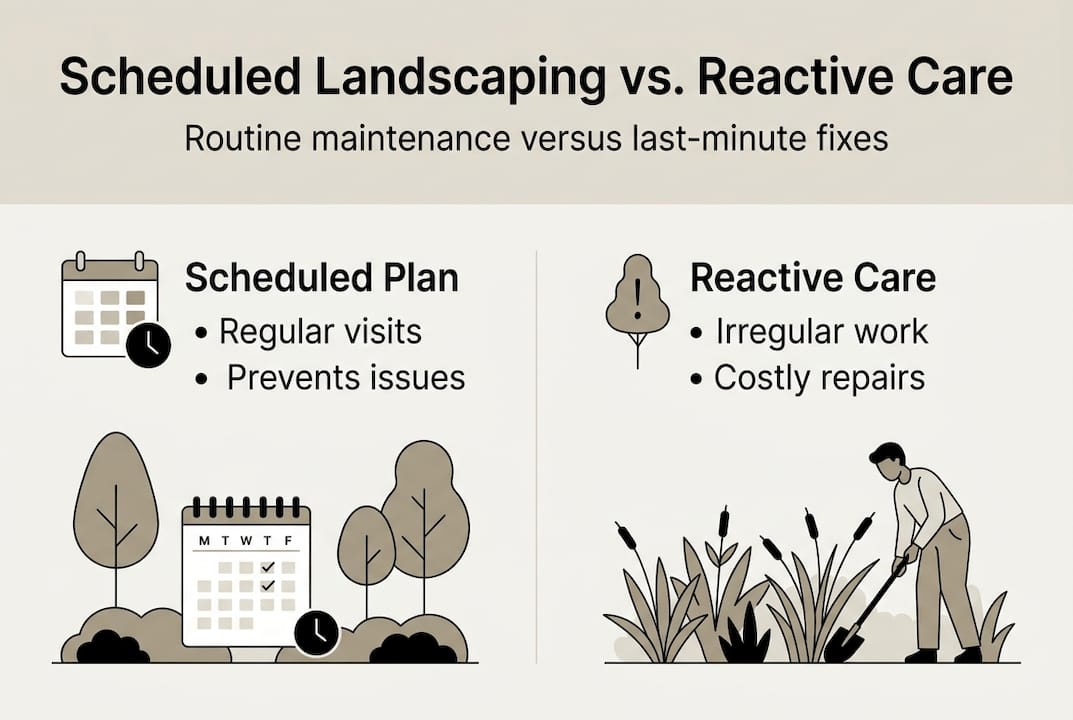
As stated in guidance on outdoor maintenance for property managers, routine landscaping preserves appearance and function, with planned seasonal work built in. Reactive services cannot match this because they are designed to solve a specific problem rather than maintain the whole.
For anyone managing a property portfolio in Dublin, effective maintenance scheduling is one of the most practical steps you can take to protect your investment. The time spent planning at the start saves significant effort throughout the year.
Key advantages of choosing a scheduled approach include:
- Consistent garden appearance all year
- No scrambling to find available tradespeople at short notice
- Lower average spend per year compared to reactive fixes
- A professional relationship with your provider, who learns your property over time
A professional perspective: What most guides miss about scheduled landscaping
Most advice on landscaping focuses on what to do. Very little discusses when and how often in a meaningful way. That is where property owners lose the most ground.
From our experience working across Dublin homes and managed sites, the biggest gains come not from big seasonal overhauls, but from small, consistent actions repeated regularly. A fortnightly mow keeps grass at the right height for root development. Monthly hedge trimming prevents the structural overgrowth that later requires heavy cutting or replacement. These small interventions build resilience over time.
What we also see is that most owners underestimate how sharply seasons shift care requirements in Dublin. Spring growth is rapid and demands more frequent attention. Autumn needs a different focus entirely. An experienced team reads these shifts and adjusts accordingly.
Part of this is knowing the warning signs. Discolouration in grass, moss creeping in at borders, soft patches near drainage points. These are early signals that most homeowners miss but that an experienced landscaper spots immediately. That early awareness is one of the real benefits of consistent, professional visits. Investing in curb appeal strategies from the start always costs less than recovering from visible neglect later.
Your next step: Scheduled landscaping made easy in Dublin
Now that you understand the full picture, the practical question is: where do you start?

At Sherry Property Care, we work with Dublin homeowners and property managers to build landscaping plans that fit the actual needs of each property. Every plan is tailored around your garden size, plant types, and local conditions. We handle the scheduling so you do not have to. Whether you manage one home or a portfolio of properties, we can start your landscaping plan with you today. Get in touch for a free quote and we will take care of the rest.
Frequently asked questions
How often should scheduled landscaping be done?
Most Dublin homes benefit from weekly or bi-weekly visits during the growing season, with seasonal extras such as mulching and fertilising scheduled quarterly.
What tasks are usually included in a scheduled landscaping plan?
Plans typically cover lawn mowing, edging, pruning, irrigation checks, and seasonal planting or mulching as standard.
Is scheduled landscaping more cost-effective than one-off garden services?
Yes. Proactive routine maintenance is more efficient and cost-effective in the long term, as it prevents minor issues from becoming expensive repairs.
How does scheduled landscaping boost property value?
Well-maintained gardens enhance kerb appeal and add 10 to 15% to the value of Dublin homes, making them more attractive to buyers and tenants alike.