
TL;DR:
- Proper window maintenance involves inspecting and caring for all components, not just cleaning the glass. Regular upkeep extends window lifespan, improves energy efficiency, and prevents costly repairs. Following a scheduled maintenance routine helps Dublin homeowners save money and preserve property value.
Window maintenance is the routine process of inspecting, cleaning, lubricating, and weatherproofing all window components to keep them functional, energy-efficient, and durable. It goes well beyond wiping down glass. Proper upkeep covers seals, hardware, drainage channels, frames, and weatherstripping. Neglecting these elements can reduce home energy efficiency by up to 30%, costing Dublin homeowners hundreds of euros each year in wasted heating. A professional tune-up costs between $100 and $300, while a full window replacement averages around $500 per unit. Regular care is simply the smarter financial choice. For a broader view of home exterior upkeep, window maintenance sits at the centre of any solid property care routine.
What is window maintenance and what does it actually cover?
Window maintenance is defined as the scheduled care of every component within a window unit, not just the glass. Many homeowners treat it as a cleaning task. The real value lies in managing seals, hardware lubrication, and drainage clearing, all of which directly affect how long your windows last and how well they perform.
A well-maintained vinyl window can last 25–35 years. A neglected one typically fails at around 15 years. That difference represents thousands of euros in avoidable replacement costs across a typical Dublin property.
Window upkeep services cover seven core areas: glass panes, frames, seals and gaskets, hardware (locks and hinges), drainage channels, trickle vents, and weatherstripping. Each ages differently. Each requires a specific type of attention. Treating them as one job is the most common mistake property owners make.
What are the key components of a window system?
Windows are complex integrated systems requiring balanced maintenance across all parts to prevent early failure. Understanding what each component does makes it far easier to spot problems before they become expensive.
| Component | How It Ages | Key Maintenance Task |
|---|---|---|
| Glass panes | Scratches, coating degradation | Gentle cleaning with mild soapy water |
| Frame (uPVC, timber, aluminium) | Warping, rot, discolouration | Wipe down, inspect for cracks, repaint timber |
| Seals and gaskets | Shrinkage, cracking, air leaks | Biannual inspection, reseal as needed |
| Hardware (locks, hinges) | Stiffness, corrosion, failure | Lubricate with 100% silicone spray twice yearly |
| Drainage (weep) holes | Blockage from debris | Clear quarterly with soft brush |
| Trickle vents | Dust blockage, reduced airflow | Clean monthly, check function seasonally |
| Weatherstripping | Compression, tearing, gaps | Inspect biannually, replace when compressed |
Seal failure is one of the costliest consequences of neglect. A failed seal lets moisture into the frame cavity, which leads to mould, rot, and structural damage. Hardware seizure is equally disruptive. A lock or hinge that has not been lubricated in years can fail entirely, creating both a security risk and a repair bill.
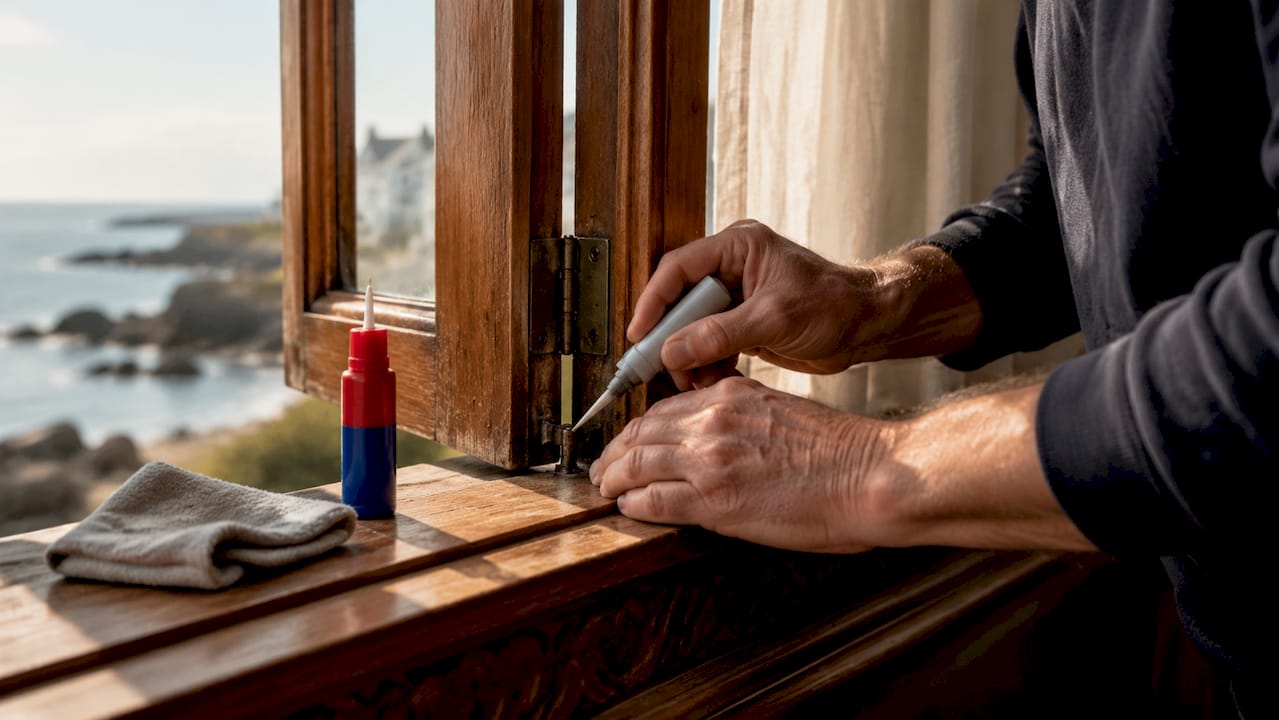
Pro Tip: Apply 100% silicone spray to a clean cloth rather than spraying directly onto hardware. This gives you even coverage and avoids overspray onto glass coatings or surrounding surfaces.
How often should you maintain your windows?
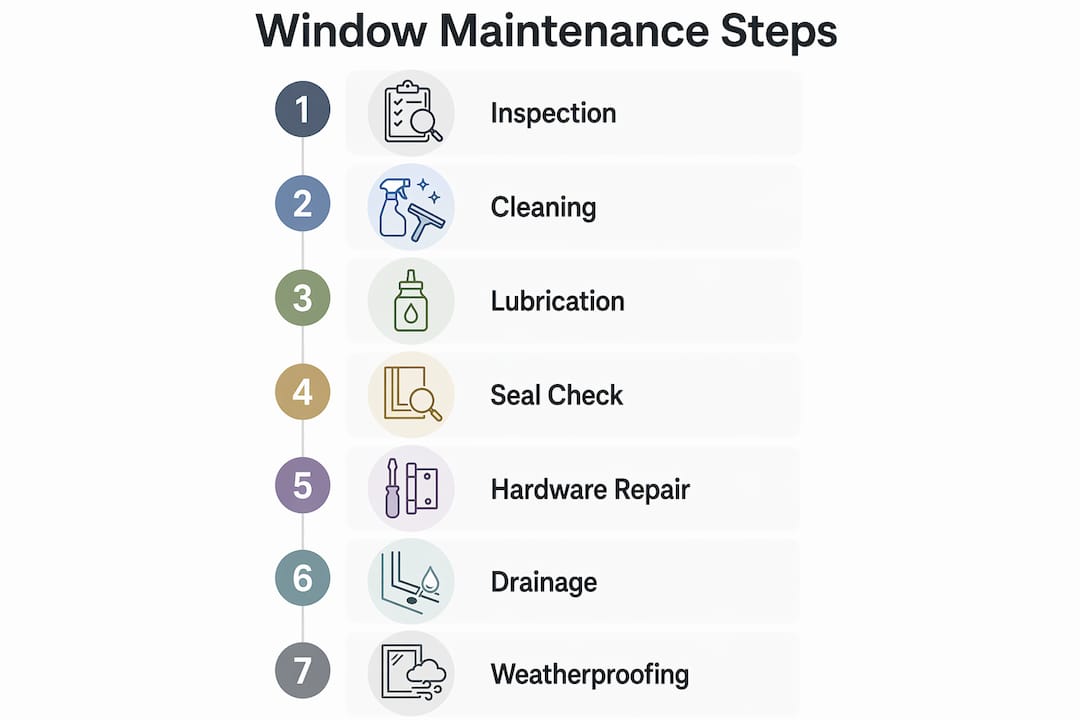
Consistency matters far more than intensity. Routine, gentle care performed regularly outperforms infrequent deep cleans every time. Here is a practical schedule that works well for Dublin properties, where wet winters and humid summers put windows under constant pressure.
Monthly:
- Clean glass with mild soapy water and a soft cloth
- Check trickle vents for dust or blockage
- Wipe down frames to remove surface grime
Quarterly:
- Clear drainage holes using a soft brush or compressed air to prevent moisture build-up and frame rot
- Inspect weatherstripping for visible compression or gaps
- Check for condensation between panes, which signals seal failure
Biannually (spring and autumn):
- Lubricate all hardware with 100% silicone spray
- Inspect seals and gaskets for cracking or shrinkage
- Check frames for early signs of rot, warping, or paint failure
- Test all opening mechanisms for smooth operation
Annually:
- Book a professional inspection and tune-up
- Review any warranty documentation for service requirements
- Address any minor repairs before winter sets in
One critical window cleaning tip: avoid pressure washing and harsh chemicals such as bleach or ammonia. These void warranties and damage Low-E energy-efficient coatings on modern window units. Mild soapy water and a soft cloth are all you need for glass and frames.
Pro Tip: Set a phone reminder for the first weekend of April and October. These biannual checks take under an hour per property and catch the majority of problems before they escalate.
What are the real benefits of regular window maintenance?
The financial case for preventative window care is straightforward. Proper upkeep saves money in three distinct ways: lower energy bills, avoided repair costs, and extended window lifespan.
On energy efficiency alone, neglecting seals and weatherstripping can reduce home energy efficiency by up to 30%. For a Dublin home with gas central heating, that translates to a meaningful portion of your annual energy spend going straight out through poorly sealed windows. Estimates suggest potential annual savings of around $463 from proper maintenance. In Irish terms, that figure sits comfortably above €400 per year for a typical semi-detached home.
Key Stat: A professional window tune-up costs £100–£300. A full window replacement averages £400–£500 per unit. Consistent maintenance is the clear financial choice.
The lifespan argument is equally compelling. Vinyl windows last 25–35 years with proper care versus around 15 years when neglected. That is a potential 10–20 year extension on a significant household asset. For property managers in Dublin overseeing multiple units, that difference compounds quickly across an entire portfolio.
Comfort improvements are just as real. Well-maintained windows reduce draughts, manage condensation, and prevent the mould growth that comes with persistent moisture ingress. For tenants and owner-occupiers alike, that means warmer rooms in winter and better air quality year-round. You can read more about the financial case for maintenance versus reactive repairs in detail.
What common window problems should you watch for?
Early detection is the single most valuable habit in any window repair guide. A problem caught at the inspection stage costs a fraction of what it costs after three years of unchecked damage.
The clearest example: a failed window seal initially costs around £15 to fix. Left unaddressed for three years, the resulting plaster damage, mould, and frame deterioration can push that bill to approximately £400. That is a 26-fold increase in cost from a single delayed repair.
Here is a practical window maintenance checklist to work through at each biannual inspection:
- Check for condensation between panes. Misting inside a double-glazed unit means the seal has failed. Replace the unit promptly.
- Inspect all seals and gaskets. Look for cracking, shrinkage, or gaps where the seal meets the frame. Reseal with appropriate silicone sealant.
- Test every lock and hinge. Stiff or grinding hardware needs lubrication. Hardware that will not engage at all needs replacement.
- Clear all drainage holes. Use a soft brush or a short blast of compressed air. Blocked weep holes cause water to back up into the frame.
- Check frames for rot or warping. Press gently on timber frames around corners and joints. Soft spots indicate moisture ingress and require prompt treatment.
- Look for draughts around the frame perimeter. Hold your hand near the edge on a windy day. Any airflow means weatherstripping has failed.
- Inspect trickle vents. These small ventilation slots above the frame are often forgotten. A blocked trickle vent reduces indoor air quality and increases condensation risk.
If you find frame rot, failed double-glazed units, or hardware that cannot be restored with lubrication, call a professional. DIY fixes on structural components can void warranties and create further problems. A property maintenance checklist for Dublin landlords covers these inspection points in a format suited to managing multiple properties.
Key takeaways
Consistent, scheduled window maintenance is the most cost-effective way to extend window lifespan, reduce energy bills, and avoid expensive repairs across any Dublin property.
| Point | Details |
|---|---|
| Maintenance covers all components | Glass, seals, hardware, drainage, and weatherstripping all need specific regular care. |
| Follow a clear schedule | Monthly cleaning, quarterly drainage checks, biannual lubrication, and annual professional inspections. |
| Early repairs save significant money | A £15 seal fix left three years can escalate to a £400 repair bill. |
| Energy savings are real | Proper upkeep can recover up to 30% in lost energy efficiency, saving over €400 annually. |
| Lifespan extends dramatically | Well-maintained vinyl windows last 25–35 years versus around 15 years when neglected. |
Why i think most homeowners are maintaining their windows wrong
After years of working with Dublin properties, I have noticed a consistent pattern. Homeowners clean their windows regularly and assume that is enough. It is not. The glass is the least important part of the system.
The Irish climate makes this especially costly. Dublin's wet winters and damp autumns push moisture into every gap a neglected seal or blocked drainage hole creates. I have seen timber frames that looked fine from the outside but were soft and rotten at the joints because weep holes had been blocked for two seasons. That damage was entirely preventable.
The other misconception I encounter regularly is that window maintenance is a job for when something goes wrong. The best window maintenance practices are invisible. You never see the seal failure that did not happen because you inspected it in October. You never pay for the frame replacement that was avoided because drainage was cleared every quarter.
My honest advice: treat your windows the way you treat your boiler. Schedule it. Do not wait for a problem to appear. A professional inspection once a year, combined with the simple monthly and quarterly tasks outlined above, will keep your windows performing well for decades. In Dublin's climate, that is not optional. It is just good property management.
— gerard
Keep your dublin property in top condition with Sherrypropertycare

Sherrypropertycare provides professional property maintenance services across Dublin, helping homeowners and landlords keep their properties in excellent condition year-round. From grounds maintenance and exterior upkeep to seasonal property inspections, the team brings meticulous attention to detail to every job.
If you want to protect your windows and the wider exterior of your property before Dublin's wet season arrives, Sherrypropertycare can help. Get in touch for a personalised quote tailored to your property's specific needs. Visit Sherrypropertycare to send photos of your property and receive a customised maintenance plan. Quality care, local expertise, and reliable service across Dublin.
FAQ
What is window maintenance in simple terms?
Window maintenance is the regular inspection, cleaning, lubrication, and repair of all window components, including glass, seals, hardware, and drainage channels, to keep them working correctly and efficiently.
How often should windows be professionally inspected?
A professional inspection once a year is the standard recommendation. Biannual DIY checks in spring and autumn complement this and catch most issues early.
What happens if you ignore window maintenance?
Neglected windows lose up to 30% of their energy efficiency and can develop seal failures, frame rot, and hardware seizure. A £15 seal repair left unaddressed for three years can cost around £400 to fix.
What is the best lubricant for window hardware?
100% silicone spray is the correct choice for window hinges, locks, and sliding mechanisms. Petroleum-based products like WD-40 attract dirt and cause stickiness over time, damaging hardware rather than protecting it.
Can window maintenance improve energy efficiency in irish homes?
Yes. Properly maintained seals and weatherstripping directly reduce heat loss. Dublin homeowners can recover a meaningful portion of annual heating costs, with estimates suggesting savings of over €400 per year from consistent upkeep.