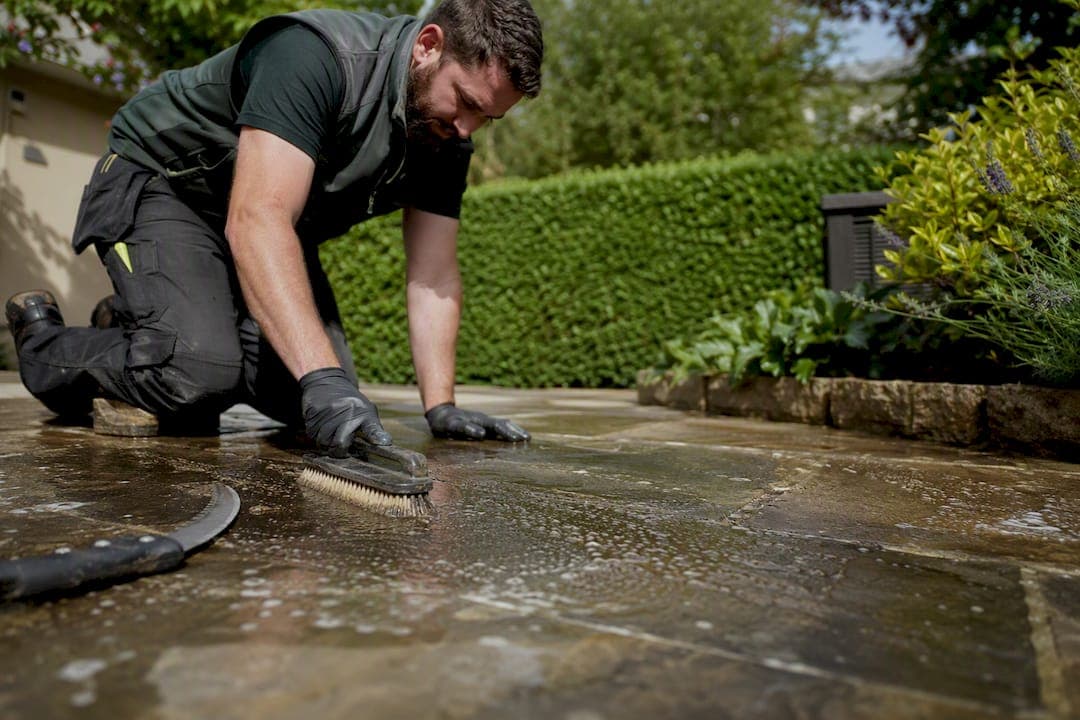
Regular outdoor floor maintenance reduces slip risk, extends the working life of patios and driveways, and protects property value. That's the whole answer. The RHS confirms that algae and moss create genuinely slippery conditions on walking surfaces, while market commentary shows buyers and appraisers reward well-maintained hardscaping over neglected outdoor space. Sherrypropertycare sees the pattern across Dublin properties every week: the surfaces that get looked after last longer and sell better.
Three reasons to act now:
- Safety and slip prevention — biofilm from algae and moss is a genuine hazard, especially after rain
- Extended service life — routine care slows joint erosion and freeze-thaw damage, cutting repair bills
- Kerb appeal and resale value — well-maintained hardscaping is valued by buyers and appraisers as an extension of your usable property
Key Takeaways
Regular outdoor floor maintenance works because it interrupts the cycle of moisture, biofilm and joint erosion before it turns into structural damage and lost property value.
| Point | Details |
|---|---|
| Safety comes first | Algae and moss biofilms make surfaces genuinely slippery; brush, prune and improve drainage as first steps. |
| Neglect compounds costs | Joint sand loss and moisture retention turn a light clean into a costly re-lay if ignored. |
| Method order matters | Try non-chemical methods before mechanical cleaning, and reserve chemicals for persistent problems. |
| Timing affects results | Schedule deep cleans in late spring and early autumn for the best results. |
| Sherrypropertycare offers tailored quotes | Covers power washing, brushing, jointing, sealing and drainage fixes for Dublin properties. |
Table of Contents
- Why floor maintenance matters for safety, lifespan and value
- What goes wrong when you skip outdoor maintenance
- How do you maintain outdoor floors properly?
- How often should you maintain patios and driveways?
- What does outdoor floor maintenance cost, and is it worth it?
- How do you choose a grounds-maintenance contractor?
- Get a tailored outdoor maintenance quote for your Dublin property
- Sources
- FAQ
Why floor maintenance matters for safety, lifespan and value
Skipping outdoor floor maintenance costs you in three separate ways, and they compound.
Safety comes first. Algae, moss, liverworts and lichens all form slippery biofilms on patios, paths and driveways, particularly in shaded or damp corners. The RHS is explicit that these growths should be controlled on any surface people walk across, and that brushing, pruning back overhanging branches, and improving drainage work as effective first steps, before anyone reaches for a chemical treatment.
Longevity is the second lever. Moss retains moisture against the surface, and that trapped damp accelerates freeze-thaw cycling in colder months. Left alone, growth pushes out kiln-dried jointing sand, which destabilises block paving and lets pavers shift underfoot. What starts as a cosmetic patch of green becomes a structural problem within a season or two.
Value is where it shows up on paper. Market commentary from the United States notes that buyers and appraisers increasingly treat permanent, well-kept hardscaping as an extension of a home's living space, and reward it accordingly compared with neglected alternatives. A tidy driveway or patio does real work at viewing stage.
Pro Tip: If your patio sits under trees, tackling the shade first (a light prune) often does more for long-term dryness than an expensive drainage upgrade — and it costs a fraction of the price.
What goes wrong when you skip outdoor maintenance
Neglect rarely announces itself. It creeps in through a handful of familiar failure modes:
- Algae biofilm building on shaded flagstones and steps
- Moss holding moisture against the surface and encouraging deeper growth
- Lichens leaving permanent staining that resists a light wash
- Jointing sand washing or growing out from between block pavers
- Weeds forcing their way into open joints and widening cracks
- Blocked drains causing pooling that feeds the whole cycle
Each of these has a real-world consequence attached. Slippery algae causes falls, particularly on steps and sloped driveways. Lifted or loosened pavers turn an even surface into a trip hazard. Vehicles lose traction on mossy inclines during wet weather, which matters more than most owners realise on a sloped Dublin driveway in winter. Left long enough, joint sand loss and growth together destabilise the whole surface, and what would have been a brush and treat job becomes a costly re-lay.
How do you maintain outdoor floors properly?
Start with non-chemical methods and escalate only when they fail. That order matters, both for cost and for the surface itself.
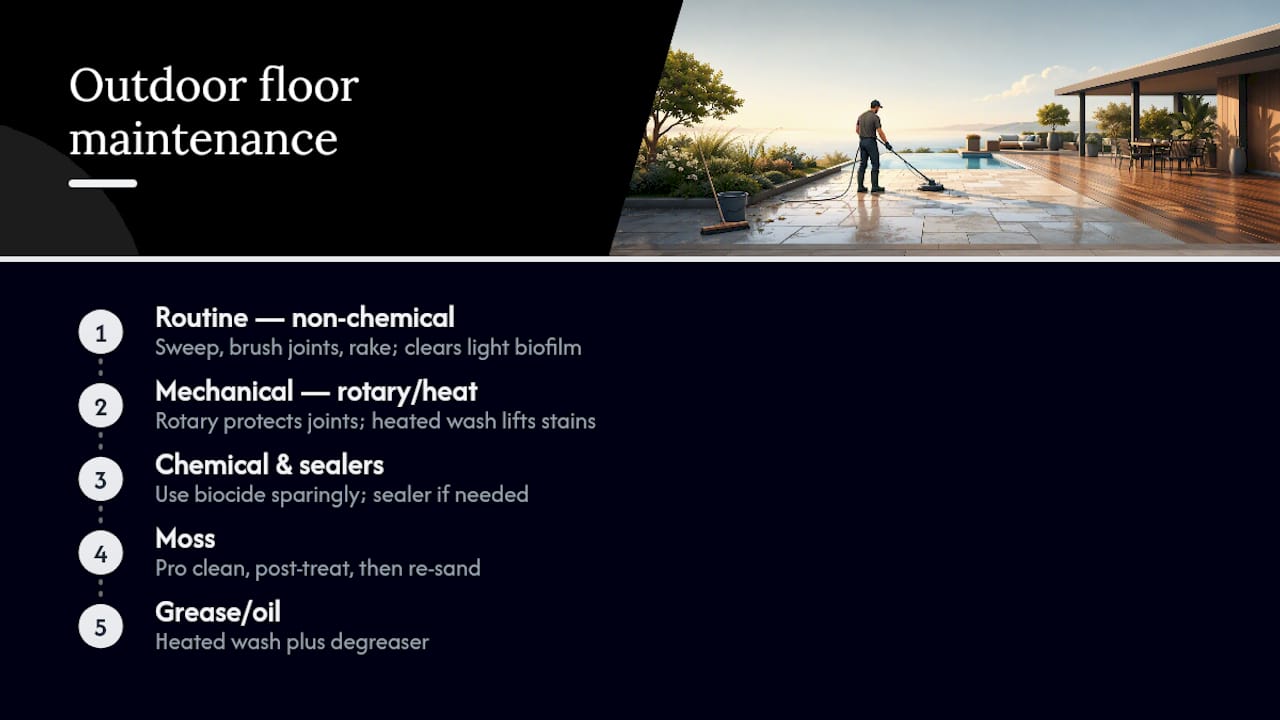
Routine, low-cost actions come first: regular sweeping, stiff-brush scrubbing of joints, raking loose gravel back into place, pruning overhanging branches to cut shade and moisture, and keeping drains clear so water doesn't pool and feed algae growth.
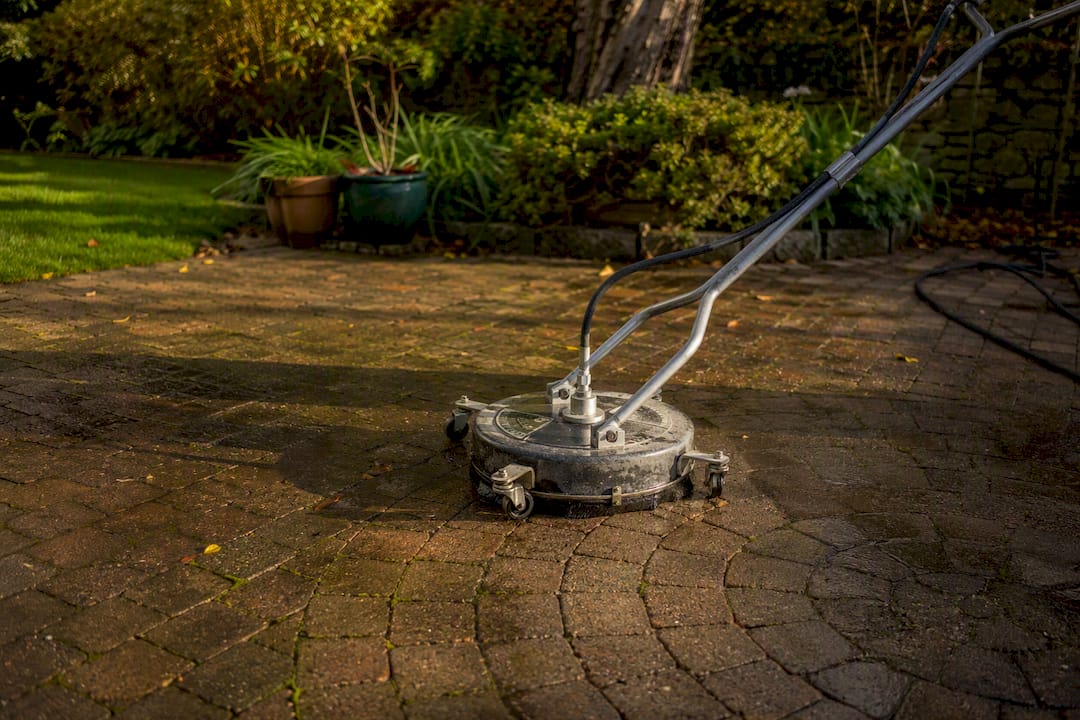
Mechanical methods step in when biofilm is established. Professional rotary surface cleaning distributes pressure evenly and avoids the striping that ruins a domestic pressure wash. Practitioner accounts show that professional rotary machines and calibrated pressure protect jointing sand far better than a handheld wand on full power, and heated washing lifts stubborn organic staining that cold water leaves behind.
Chemical and post-treatment options belong last on the list. Targeted biocide treatments make sense where brushing and pruning alone haven't solved a persistent problem, but they need to be used sparingly and appropriately, with sealers and anti-slip finishes reserved for surfaces that need lasting protection.
Quick decision rules help here: light biofilm responds to brushing alone; established moss usually needs a professional clean followed by post-treatment and re-sanding; grease or oil stains call for a heated wash and degreaser rather than a standard pressure clean.
Pro Tip: Never assume more pressure equals a better clean. Excessive pressure etches concrete and damages mortar joints, and a domestic pressure washer is the single most common cause of stripped patios and washed-out jointing sand. If in doubt, read our guide to power washing a patio safely before you hire equipment yourself.
How often should you maintain patios and driveways?
Cadence depends on exposure. Surfaces under trees or in permanent shade need attention every 6 to 12 months. A typical residential patio or driveway holds up well on an annual schedule. Low-use surfaces, such as a side path that sees little foot traffic, can often stretch to every 18 to 24 months.
Timing matters as much as frequency. Deep cleans work best in late spring, after winter damp has done its worst, and again in early autumn to prepare surfaces for the wet months ahead.
Watch for these warning signs that mean act now, not next season:
- Visible moss or algae patches, especially on steps or slopes
- Water pooling after rain instead of draining away
- Noticeably slippery surfaces after rain or overnight dew
- Pavers that feel loose or shift underfoot
- Staining that a light brush and rinse won't shift
A simple three-step timeline works for most properties: 1) inspect twice a year, spring and autumn; 2) carry out light brushing and drain clearing as routine upkeep; 3) book a professional deep clean when growth or staining has taken hold.
What does outdoor floor maintenance cost, and is it worth it?
Price depends on a handful of factors: surface area, ease of access, the material itself (block paving, natural stone, concrete, decking), how bad the growth or staining has become, whether joints need repairing, and whether drainage work or hot-water equipment is required.
The return on investment logic is straightforward. Routine upkeep, brushing, drain clearing, an annual clean, costs far less than the alternative: joints failing, pavers needing to be lifted and re-laid, or a full resurfacing job once neglect has run its course. A professionally cleaned patio measurably improves how a property presents at viewing stage, which matters directly if you're letting or selling.
- Surface area and access difficulty drive labour time
- Material type determines which cleaning method is safe
- Severity of growth or staining affects treatment complexity
- Joint repairs and drainage fixes add to scope but prevent bigger bills later
Treat an annual maintenance budget as insurance against a much larger capital repair bill down the line.
How do you choose a grounds-maintenance contractor?
Vet any contractor the same way you'd vet a builder. Ask to see:
- Local experience with the surface types on your property
- A clear equipment list and method description for each surface
- Environmental safeguards for run-off and chemical use
- Valid insurance cover
On the site visit, ask specifically about cleaning method, pressure settings, whether hot water is used, and what happens after cleaning, will they re-sand joints or apply a seal? Ask about expected longevity and whether any guarantee is offered.
A proper quote should itemise:
- Surface area and access notes
- Preparatory work (pruning, drain clearing)
- Cleaning method and equipment
- Consumables and any rinse-water disposal
- Follow-up treatments (sealing, re-sanding)
- Timescale for the job
Sherrypropertycare provides tailored quotes for Dublin properties covering power washing, brushing, jointing, sealing and drainage fixes, scoped to what your surface actually needs rather than a one-size job. For readers comparing local options more broadly, Fingal cleaning contractors also offer free quotes worth requesting alongside.
A provider's view on preventive care
Across Dublin properties, the most common oversight is the same one every time: owners wait until a patio is visibly green before calling anyone. By then, joints have often already lost sand and the job costs more than a routine clean would have. Stay ahead of it and the surface stays safer, and lasts longer, with far less drama.
Get a tailored outdoor maintenance quote for your Dublin property
Sherrypropertycare gives you one local contact for the whole job, rather than juggling separate quotes for cleaning, joint repairs and sealing. We cover patio and driveway cleaning, moss and algae control, power washing, joint repairs, sealing and drainage fixes across Dublin properties, residential and commercial.

A typical quote starts with a site assessment, either in person or from photos you send us, followed by a recommended method for your specific surface, a clear price breakdown, and honest follow-up advice on what will keep the job looking good. We favour non-chemical, cultural methods first, brushing, pruning, drainage improvement, and only escalate to targeted treatments where needed, in line with the RHS's own guidance on hard-surface care. If a driveway maintenance plan is what you're after, our guide on boosting kerb appeal and driveway longevity is worth a read first.
Send us a few photos of your patio, path or driveway and request your tailored quote today.
Sources
- Exclusive: market rewards permanence in outdoor living spaces
- Algae, lichens, liverworts and moss on hard surfaces (RHS)
FAQ
Why does floor maintenance matter for outdoor surfaces?
It reduces slip risk from algae and moss, slows joint erosion and surface failure, and preserves the kerb appeal that supports property value.
How often should I clean my patio or driveway?
Shaded surfaces need attention every 6 to 12 months, typical residential surfaces annually, and low-use areas every 18 to 24 months.
Is pressure washing safe for all outdoor surfaces?
No. Excessive pressure can etch concrete, damage mortar joints and strip jointing sand, which is why professional rotary cleaning with calibrated pressure is safer for most surfaces.
Should I use chemicals to remove moss and algae?
Cultural methods, brushing, pruning and improving drainage, should come first; chemical treatments are best reserved for persistent problems that don't respond to routine care.
Can Sherrypropertycare provide a quote for my Dublin property?
Yes. Sherrypropertycare offers tailored quotes covering power washing, brushing, jointing, sealing and drainage fixes for residential and commercial properties across Dublin.