TL;DR:
- Regular property maintenance protects property value, reduces costly repairs, and boosts tenant satisfaction.
- A consistent upkeep routine saves money, supports legal compliance, and enhances curb appeal in Dublin.
Regular property upkeep is defined as the planned, consistent care of a building and its grounds to preserve condition, value, and legal compliance. For homeowners and property managers in Dublin, this is not optional maintenance. It is the most direct way to protect your investment, avoid expensive emergency repairs, and keep tenants satisfied. Sherrypropertycare works with Dublin property owners every day who have seen first-hand how neglect compounds quietly until it becomes a serious financial problem. The good news is that understanding why invest in regular upkeep is the first step to preventing that outcome entirely.
Why invest in regular upkeep: the property value case
Regular upkeep directly protects and increases what your property is worth. Failing to maintain a property can reduce its value by 5–15%, with losses reaching £75,000 in high-value markets over ten years. That figure represents a serious financial risk that no landlord or homeowner should accept passively.
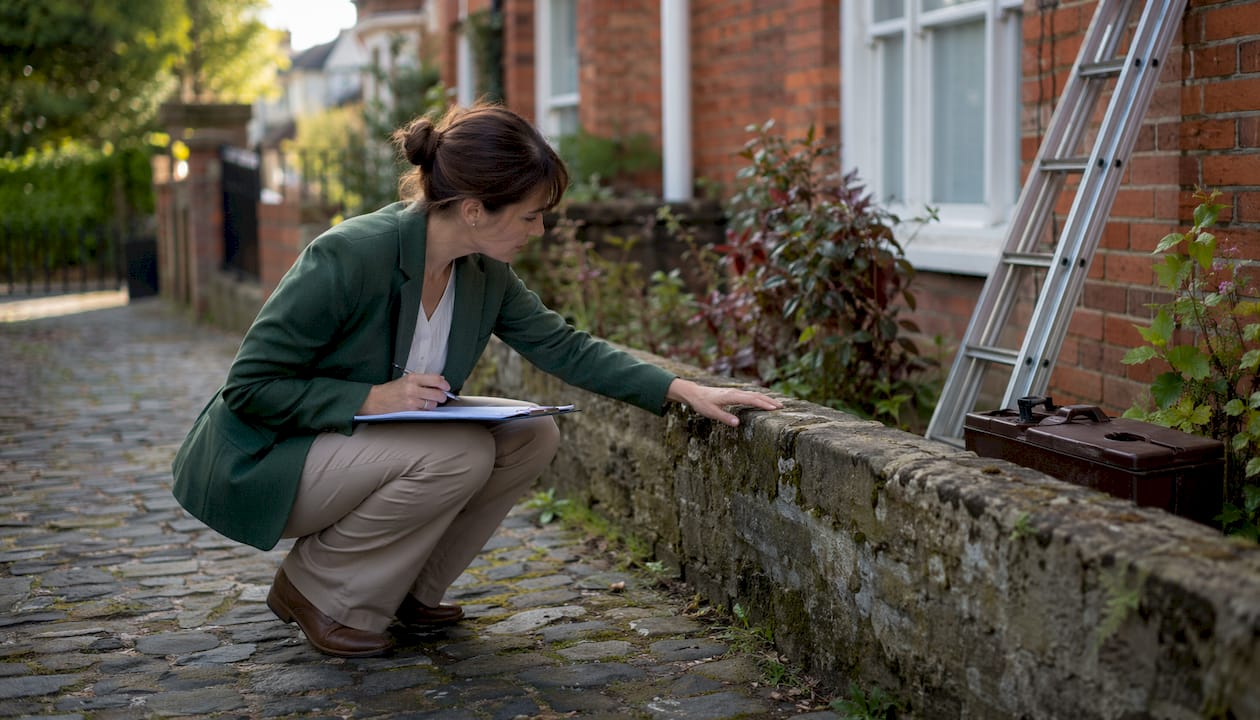
Buyers and surveyors form judgements about a property within seconds of arrival. Exterior maintenance cues heavily influence valuation adjustments before a surveyor even steps inside. A well-kept garden, clean paths, and trimmed hedges signal that the interior has received the same attention.
The numbers on curb appeal are striking. 30% of buyers will pay £5,000 or more for excellent exterior presentation. At the same time, 68% of buyers are deterred or reduce their offer when the exterior looks neglected. That is a wide gap in outcome, driven entirely by upkeep decisions.
Landscaping is a particularly powerful lever. Unkempt gardens deter 38% of buyers, who read poor exterior care as a signal of neglect throughout the entire property. Sherrypropertycare's landscaping and garden care services address exactly this perception gap for Dublin properties.
| Maintenance status | Effect on value | Buyer behaviour |
|---|---|---|
| Well-maintained exterior | Supports or increases asking price | 30% willing to pay a premium |
| Neglected exterior | 5–15% value reduction | 68% deterred or offer less |
| Unkempt garden specifically | Signals wider neglect | 38% of buyers walk away |
| Documented upkeep records | Supports surveyor confidence | Reduces valuation risk |
What are the financial advantages of proactive vs reactive maintenance?
Planned preventative maintenance, known in the industry as PPM, is the practice of scheduling regular checks and repairs before problems occur. The financial case for PPM over reactive repair is clear and well-documented.
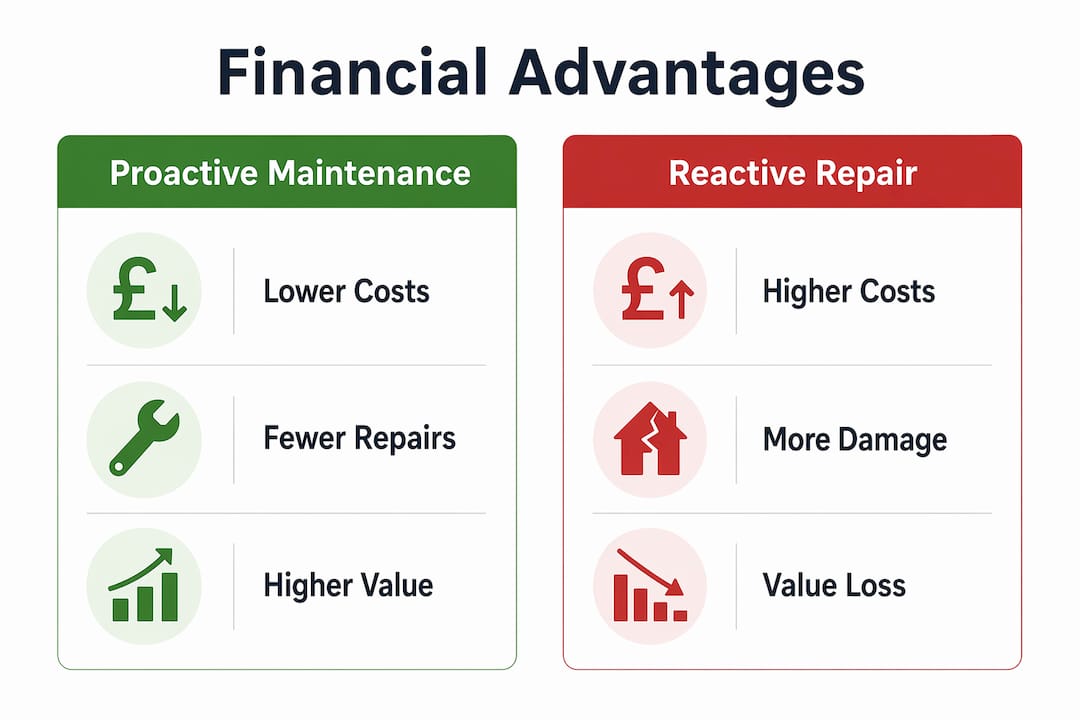
Every £1 spent on planned maintenance saves approximately £3–£5 in reactive repair costs. That ratio exists because planned work prevents emergencies, secondary damage, and the premium labour rates that come with urgent call-outs. Reactive repairs, by contrast, cost 3 to 5 times more per incident due to emergency rates, expedited parts, and collateral damage.
The hidden costs go further than the repair invoice. Reactive maintenance invoices appear smaller at first glance, but they can incur up to twice the labour costs and up to ten times the expedited parts costs compared to planned work. A single ignored cracked roof tile, for example, costs a fraction of the price to fix early. Left unaddressed, it leads to water ingress, mould remediation, and structural repairs that run into thousands.
Scheduled maintenance reduces total maintenance costs by 25–40% and prevents 85% of major repairs. For a Dublin property manager overseeing multiple units, those percentages translate directly into budget predictability and fewer crisis calls.
Pro Tip: Set a fixed annual maintenance budget based on 1–2% of your property's value. Allocate it across quarterly checks for drainage, electrics, boilers, and exterior grounds. This single habit removes most reactive repair risk.
The comparison below shows why the choice between PPM and reactive maintenance is not really a choice at all.
| Factor | Planned preventative maintenance | Reactive repair only |
|---|---|---|
| Cost per incident | Lower, scheduled rates | 3–5x higher, emergency rates |
| Labour costs | Standard | Up to 2x standard |
| Parts costs | Standard procurement | Up to 10x expedited cost |
| Long-term savings | 25–40% cost reduction | No savings, unpredictable spend |
| Major repair prevention | 85% of major repairs avoided | High risk of cascading damage |
How does regular upkeep improve tenant satisfaction and reduce voids?
Tenant satisfaction and property upkeep are directly linked. Properties with planned maintenance schedules achieve 89% positive tenant sentiment, compared to 62% for properties managed reactively. That 27-percentage-point gap has a direct effect on tenancy length and void periods.
Tenant attrition and property voids are, indirectly, the largest cost of poor maintenance. The direct repair bill is visible. The cost of a vacant property for two months while you find a replacement tenant is not always calculated, but it is real and significant. Consistent upkeep keeps good tenants in place and removes one of the most common reasons for early tenancy termination.
Legal compliance also plays a role in tenant confidence. Routine maintenance records protect landlords under Irish and UK law, demonstrating compliance and supporting insurance claims when disputes arise. In Ireland, landlords have clear obligations under the Residential Tenancies Act to maintain properties in good repair. Documented upkeep is your evidence that those obligations have been met.
The benefits of regular maintenance for tenants include:
- Fewer emergency breakdowns and disruptions to daily life
- Faster resolution of issues when they do arise, because contractors are already familiar with the property
- Confidence that the landlord takes their responsibilities seriously
- A well-presented exterior and communal areas that reflect well on the property
- Reduced likelihood of disputes over deposit deductions at tenancy end
Sherrypropertycare's approach to tenant retention through upkeep is built around exactly these outcomes for Dublin landlords.
What practical steps establish an effective upkeep routine?
A reliable maintenance routine starts with a written schedule. Without one, upkeep becomes reactive by default. The schedule should cover every major system and surface on a defined cycle.
Recommended service schedule
A practical annual cycle for Dublin properties covers the following:
- Boiler and heating system: Service annually before the winter months, ideally in september or october.
- Electrical systems: Full inspection every five years at minimum, with visual checks annually.
- Drainage and gutters: Clear and inspect twice yearly, in spring and autumn, to prevent blockages before heavy rain.
- Roof and exterior walls: Visual inspection each spring for cracked tiles, pointing, or render damage.
- Landscaping and grounds: Monthly lawn care, seasonal hedge trimming, and annual replanting where needed.
- Gates and boundary features: Check hinges, locks, and structural integrity twice yearly. Gate maintenance is often overlooked but affects both security and kerb appeal.
Keeping records that protect you
A maintenance log is not just good practice. It is legal protection. Documented maintenance schedules are critical evidence for insurance claims and compliance under statutes including Awaab's Law and the Renters' Rights Act. In Ireland, the same principle applies under the Residential Tenancies Act. Keep dated records of every inspection, repair, and contractor visit.
Digital tools make this straightforward. A shared spreadsheet or a property management app gives you a timestamped log that is easy to retrieve when needed. The format matters less than the consistency.
Prioritising what matters most
Not all maintenance tasks carry equal risk. Prioritise anything that affects safety, weatherproofing, or legal compliance first. Cosmetic work comes after structural integrity is confirmed. Sherrypropertycare recommends that Dublin property owners treat exterior upkeep as a first-tier priority, because it affects both value and tenant perception simultaneously.
Pro Tip: Walk your property on the first day of each month. A ten-minute visual check of gutters, paths, fencing, and planting catches small issues before they become expensive ones.
My honest view on upkeep after years in Dublin property care
Gerard's take: why neglect always costs more than maintenance
I have seen the same pattern repeat itself across Dublin properties of every size and type. An owner skips a few maintenance cycles, usually because the property looks fine from the outside. Then one winter, a blocked gutter causes water to track behind the fascia board. By spring, there is rot, damp, and a repair bill that dwarfs every maintenance cost they avoided.
The uncomfortable truth is that reactive maintenance feels cheaper because the costs are spread across time and often invisible until they are not. Planned upkeep feels like an expense. It is actually a form of insurance with a guaranteed return.
What I find most telling is the buyer and tenant response to well-maintained properties. You do not need to spend a fortune. You need to spend consistently. A tidy garden, clean paths, and a freshly painted front door do more for a Dublin property's perceived value than an expensive interior renovation that nobody sees from the street.
My advice to any property owner or manager reading this is simple. Stop waiting for something to break. Build a schedule, keep records, and work with professionals who know what to look for. The long-term savings from planned maintenance are not theoretical. They show up in your repair bills, your tenant retention, and your property valuation.
— gerard
Sherrypropertycare: regular upkeep services for Dublin properties
Sherrypropertycare provides professional grounds maintenance and exterior upkeep services for residential and commercial properties across Dublin. The team handles everything from lawn care and hedge trimming to full grounds management, with bespoke plans tailored to each property's needs.

Outsourcing your grounds upkeep to an experienced local provider removes the guesswork from scheduling and keeps your property looking its best year-round. Sherrypropertycare works directly with homeowners, landlords, and property managers to build maintenance programmes that protect value and meet the expectations of Dublin's property market. Visit Sherrypropertycare's services page to request a tailored quote and find out how consistent care can work for your property.
Key takeaways
Regular upkeep is the most cost-effective way to protect property value, retain tenants, and avoid the compounding costs of reactive repair.
| Point | Details |
|---|---|
| Value protection | Poor maintenance reduces property value by 5–15%, costing tens of thousands over time. |
| PPM savings | Every £1 spent on planned maintenance saves £3–£5 in reactive repair costs. |
| Tenant satisfaction | Planned maintenance achieves 89% positive tenant sentiment versus 62% for reactive-only properties. |
| Legal compliance | Documented maintenance records protect landlords under Irish law and support insurance claims. |
| Curb appeal impact | 68% of buyers are deterred or offer less when exterior presentation is poor. |
FAQ
How much value can poor maintenance remove from a property?
Poor maintenance can reduce a property's value by 5–15%, with losses reaching £75,000 in high-value markets over ten years.
What is planned preventative maintenance?
Planned preventative maintenance, or PPM, is a scheduled programme of regular inspections and repairs carried out before problems occur. It costs significantly less than reactive repair and prevents 85% of major repair incidents.
Does landscaping really affect property value in Dublin?
Yes. Unkempt gardens deter 38% of buyers, who read poor exterior care as a sign of wider neglect. Well-maintained grounds support asking prices and improve buyer confidence at the point of valuation.
How often should Dublin homeowners carry out property checks?
A monthly visual check of exterior features, combined with annual servicing of boilers and electrics and twice-yearly drainage clearance, covers the most common sources of serious damage.
Are maintenance records legally required in Ireland?
Maintenance records are not always explicitly required by law, but they serve as critical evidence of compliance under the Residential Tenancies Act and support insurance claims. Keeping dated records of all inspections and repairs is strongly advisable for every Dublin landlord.