
TL;DR:
- Proactive property maintenance in Dublin reduces costs, extends equipment lifespan, and improves tenant retention. It requires regular inspections, proper documentation, and seasonal routines to prevent costly emergencies and comply with legal obligations. Treating maintenance as a strategic investment safeguards your property, tenant satisfaction, and income over time.
Landlords in Dublin who rely on a "fix it when it breaks" approach are quietly losing money. The reason why proactive property maintenance outperforms reactive repairs is straightforward: small faults caught early cost a fraction of what they cost once they become urgent. A blocked gutter ignored through autumn becomes a damp wall by February. A boiler showing signs of strain in October becomes a crisis call on a Friday night in January. Dublin's rental market is competitive, tenant expectations are rising, and routine upkeep prevents small issues from worsening into major problems that drive up costs and push tenants out. This article covers the financial case, legal obligations, local property challenges, and practical steps every Dublin landlord should know.
Table of Contents
- Key takeaways
- Why proactive property maintenance pays off financially
- Legal duties and compliance for Dublin landlords
- Common maintenance challenges in Dublin properties
- Practical strategies for how to maintain property in Dublin
- My view: maintenance is not a cost, it is a strategy
- How Sherrypropertycare supports Dublin landlords
- FAQ
Key takeaways
| Point | Details |
|---|---|
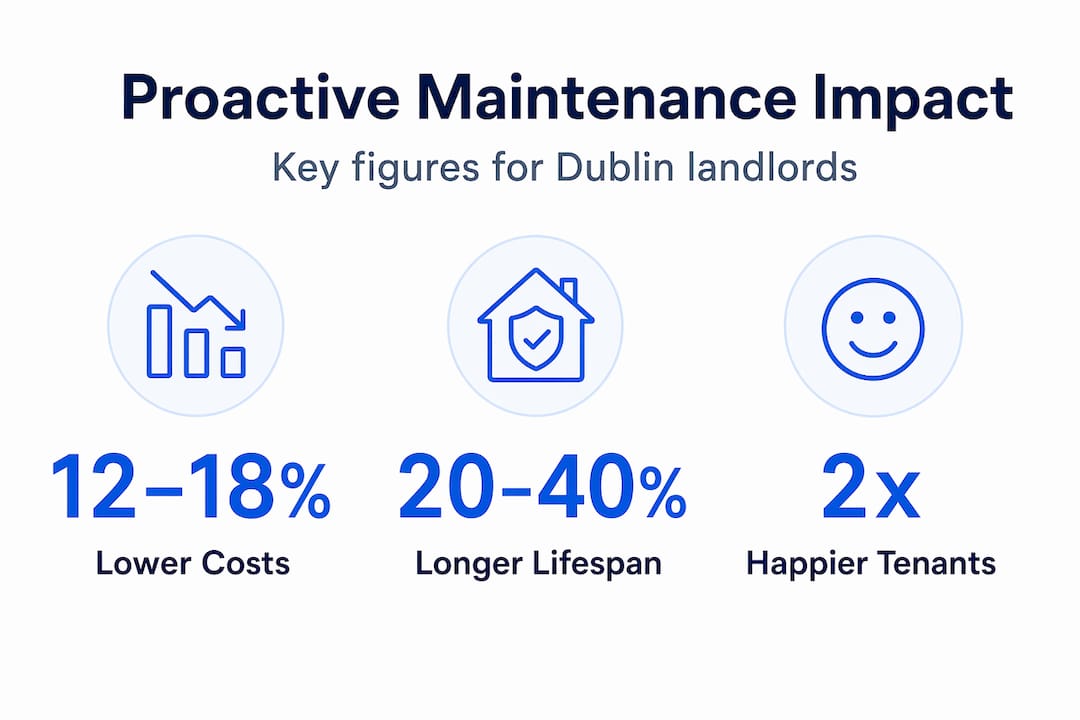
| Cost savings are measurable | Preventive maintenance reduces overall costs by 12–18% and extends equipment lifespan by 20–40%. |
| RTB compliance demands records | Landlords must keep invoices, inspection reports, and photos to satisfy RTB obligations and support Revenue expense claims. |
| Dublin properties face specific risks | Older terraces, damp climates, and ageing boilers make scheduled and condition-based inspection routines particularly valuable here. |
| Condition-based maintenance cuts downtime | Reacting to actual asset condition rather than fixed schedules reduces downtime by 25–30% compared to calendar-only approaches. |
| Proactive upkeep retains tenants | Well-maintained properties experience shorter vacancy periods and more stable tenancies, directly protecting rental income. |
Why proactive property maintenance pays off financially
The financial case for the importance of proactive maintenance is not abstract. It shows up in your bank account. Early issue detection saves thousands and protects both tenant satisfaction and asset value. Compare the cost of resealing a flat roof section in spring against replacing a water-damaged ceiling in a tenanted bedroom. The first is a scheduled afternoon's work. The second involves contractors, possible decanting of tenants, insurance claims, and weeks of disruption.
Beyond individual repairs, consider the broader financial picture:
- Fewer emergency call-outs. Emergency tradespeople charge premium rates, particularly in Dublin where demand for skilled contractors is high.
- Longer equipment lifespan. Boilers, ventilation systems, and electrical boards all last longer when serviced regularly rather than pushed to failure.
- Controlled annual budgets. When you know what is coming, you can plan spending. Reactive maintenance makes budgeting nearly impossible.
- Shorter void periods. Routine upkeep shortens vacancy periods and creates more stable tenancies, which means less time with no rental income.
Structured preventive maintenance also has documented performance gains. Preventive maintenance cuts overall costs by 12–18% and extends equipment lifespan by 20 to 40 per cent. Those numbers apply directly to your boiler, your roof, your plumbing stack. Every year you extend a heating system's life is a year you defer a significant capital outlay.
Pro Tip: Set aside a maintenance reserve of roughly 1% of your property's value annually. In Dublin, where older stock dominates, you may want to push that closer to 1.5%. This fund covers planned work and buffers unexpected issues without disrupting your cash flow.
Property maintenance vs reactive repairs is not just a tactical choice. It is a financial strategy that compounds over time.
Legal duties and compliance for Dublin landlords
Irish landlord law is not forgiving of neglect, and this is one area where the importance of proactive maintenance takes on a different weight entirely.
Under Irish tenancy law, emergency repairs posing health or safety risks must be addressed immediately and without unreasonable delay. That includes major plumbing leaks, total loss of heating in winter, and dangerous electrical faults. If you have not been maintaining systems regularly, you are far more likely to face these emergencies with no warning and no contractor relationship in place.
The RTB adds another layer. Here are the core documentation requirements every Dublin landlord should have in place:
- Invoices for all completed work. Every repair, service, or upgrade must be receipted and filed, either digitally or physically.
- Inspection reports. Regular inspections with written records show you are actively monitoring the property's condition.
- Photographs. Dated photos before and after work document the property's state and your response to issues.
- Completion notes. A brief note of what was done, by whom, and when ties the paper trail together.
Landlords must maintain detailed documentary evidence for repairs to support RTB compliance and Revenue expense claims. This documentation is not just bureaucracy. It is your legal defence if a tenant dispute arises, and it is the basis for claiming repairs as allowable expenses against rental income.
"A documented repair history is the most effective legal defence a Dublin landlord can have. Without it, disputes become a matter of your word against the tenant's."
Your Dublin landlord maintenance responsibilities are not optional. A proactive maintenance programme makes it far easier to meet them consistently.
Common maintenance challenges in Dublin properties
Dublin's housing stock is older than many landlords realise when they first acquire it. Victorian and Edwardian terraces in areas like Ranelagh, Phibsborough, and Drumcondra look solid but carry decades of deferred maintenance risk. Even 1970s and 1980s estates in Tallaght, Blanchardstown, and Clonskeagh have ageing infrastructure that requires regular attention.
The most common issues in Dublin's residential and commercial stock include:
- Damp and condensation. Poor ventilation in older buildings creates persistent damp that damages plaster, timber, and tenant health.
- Ageing boiler systems. Many properties still run on oil or gas systems that predate modern efficiency standards. Without annual servicing, they become unreliable and expensive.
- Roof and gutter deterioration. Dublin's wet winters accelerate wear on roofing felt, flashings, and guttering. Small gaps become leaks quickly.
- Insulation failures. Uninsulated or poorly insulated attic spaces and walls lead to heat loss, higher energy bills, and tenant discomfort.
The seasonal dimension matters too. Autumn is the time to clear gutters, check roof tiles, and service heating systems before the cold arrives. Spring is the time to assess what winter has done and address any damage before it worsens through summer damp.
| Season | Priority maintenance areas |
|---|---|
| Autumn | Boiler service, gutter clearing, roof check, draught-proofing |
| Winter | Heating system monitoring, pipe insulation, emergency response readiness |
| Spring | Inspect for winter damage, damp checks, exterior paintwork assessment |
| Summer | Grounds maintenance, ventilation checks, window and door sealing |
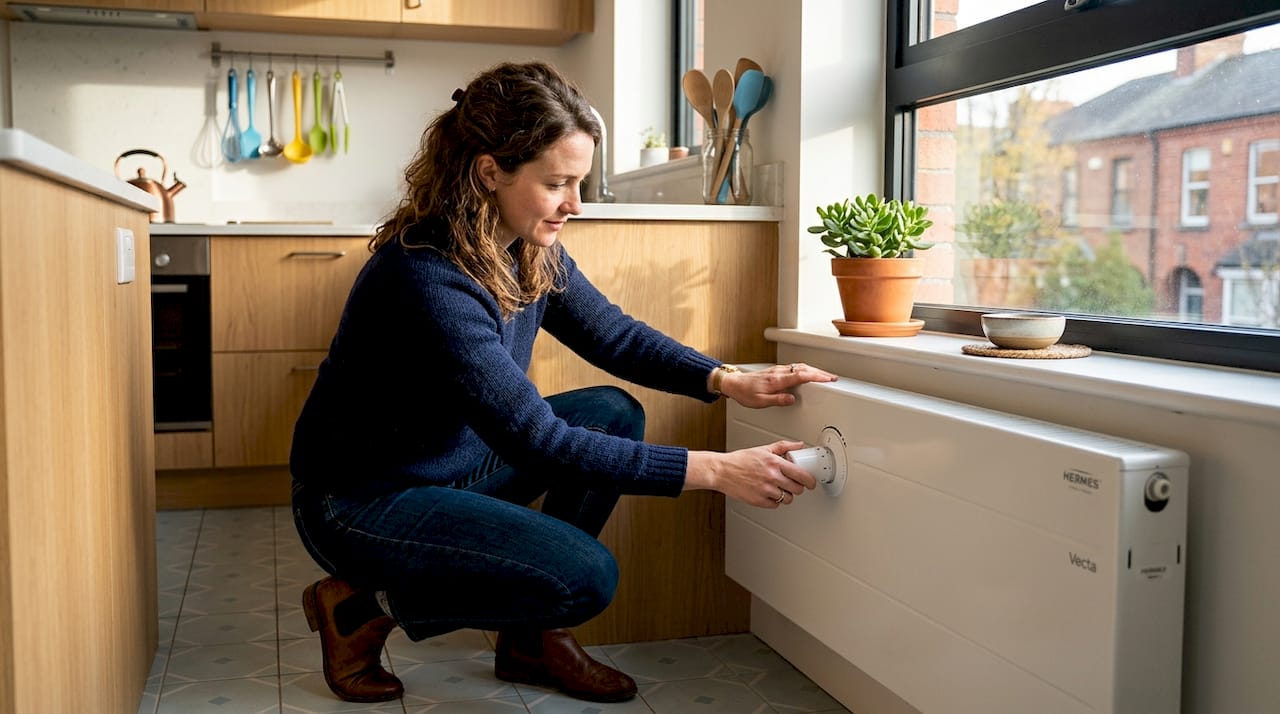
Tenant expectations have also shifted. Dublin renters in 2026 are increasingly aware of BER ratings and heating quality. Energy-related proactive maintenance, including heating controls upgrades and fabric improvements, can reduce heating waste by 10 to 20 per cent while improving BER ratings and tenant comfort. A property that holds heat and heats quickly gets far fewer complaints and fewer grounds for dispute about habitability.
Practical strategies for how to maintain property in Dublin
Understanding the problem is one thing. Knowing how to maintain property in a structured, sustainable way is where landlords actually protect their investments.
A key shift in property management best practices is moving away from purely calendar-based routines towards condition-based approaches. Condition-based maintenance reduces downtime by 25–30% compared to fixed-schedule servicing alone. In practice, this means your boiler gets serviced when a service is due and when it shows signs of inefficiency, not just because a year has passed. Combine both approaches and you get the best of both worlds.
Here is a practical framework for preventative maintenance for properties in Dublin:
- Conduct a baseline inspection. If you have not done a thorough inspection recently, start there. Photograph every room, check every system, and note any wear or defect.
- Build a seasonal maintenance calendar. Map out the key tasks for each quarter and assign them to specific contractors or service providers in advance.
- Establish contractor relationships now, not during an emergency. Dublin tradespeople with good reputations are busy. A relationship built during non-urgent work means you get prioritised when urgency does arise.
- Document everything. Use a simple folder system or a digital tool. Digital tools can enhance scheduling and documentation to support thorough, consistent maintenance records.
- Review energy efficiency opportunities. Heating controls, attic insulation, and draught-proofing are often grant-assisted in Ireland and pay back quickly in reduced complaints and improved BER.
- Consider a professional maintenance contract. For landlords managing multiple properties or time-poor owners with a single property, maintenance contracts save money and remove the coordination burden entirely.
Pro Tip: When commissioning a seasonal inspection, ask the contractor to note anything that is "watchful" as well as anything that needs immediate attention. A watch list gives you advance warning of costs to budget for, which is far better than surprises.
Property maintenance as an investment strategy is now the standard view among experienced portfolio landlords. The question is not whether to maintain proactively, but how to organise it most efficiently.
My view: maintenance is not a cost, it is a strategy
Over the years working with Dublin property owners, I have seen the same pattern repeat itself. A landlord does nothing for two or three years, then faces a cluster of expensive emergencies that wipe out the savings they thought they were making. They were not saving money by skipping maintenance. They were borrowing against future problems at a very high interest rate.
What I find is often missed is the quieter value: tenant satisfaction. A tenant who feels their landlord responds quickly and maintains the property well stays longer. That means fewer void periods, fewer new tenancy set-up costs, and less wear and tear from move-in and move-out cycles.
The documentation habit is another one. Landlords who keep consistent records tell me that filing their annual tax return and responding to any RTB queries is straightforward. Those who do not keep records find it stressful and expensive, often failing to claim legitimate expenses simply because they cannot prove what was spent.
Dublin's rental market is not getting easier. Tenant rights are strengthening, energy efficiency standards are rising, and the cost of emergency repairs is climbing. The landlords who will manage their investments well over the next decade are the ones who treat maintenance as part of the job, not an interruption to it.
— gerard
How Sherrypropertycare supports Dublin landlords
If this article has made one thing clear, it is that consistent, well-documented, proactive upkeep is what protects your property, your tenants, and your income. Sherrypropertycare works with Dublin landlords and property owners to keep grounds, gardens, and exterior spaces in excellent condition throughout the year.

From lawn care and grounds maintenance to hedge trimming, landscaping, and seasonal upkeep, Sherrypropertycare provides tailored maintenance programmes designed around your property's specific needs. Whether you own a single terraced house in Dublin 6 or manage a commercial premises in the city centre, a well-maintained exterior makes a strong impression on tenants and visitors alike. Get in touch with Sherrypropertycare today for a customised quote. Send a photo of your property and get a clear, no-obligation response from a team that understands Dublin's properties inside out.
FAQ
What is proactive property maintenance?
Proactive property maintenance means identifying and addressing wear, defects, and ageing systems before they become failures. It contrasts with reactive maintenance, which only responds after something breaks or stops working.
How much can proactive maintenance save Dublin landlords?
Preventive maintenance reduces overall costs by 12–18% and extends equipment lifespan by 20 to 40 per cent. Over the life of a rental property, those savings are substantial.
What records must Dublin landlords keep for RTB compliance?
Landlords must keep invoices, inspection reports, photos, and completion notes for all repairs. These records support RTB compliance, Revenue expense claims, and dispute defence.
How often should I inspect a rental property in Dublin?
A full inspection at least twice a year is good practice, with additional seasonal checks on key systems such as boilers, gutters, and roofing. Older properties in Dublin may warrant quarterly assessments given the age of the building stock.
What are the most urgent repairs landlords must address immediately?
Emergency repairs posing health or safety risks must be addressed immediately under Irish law. These include major plumbing leaks, complete loss of heating during cold periods, and dangerous electrical faults.