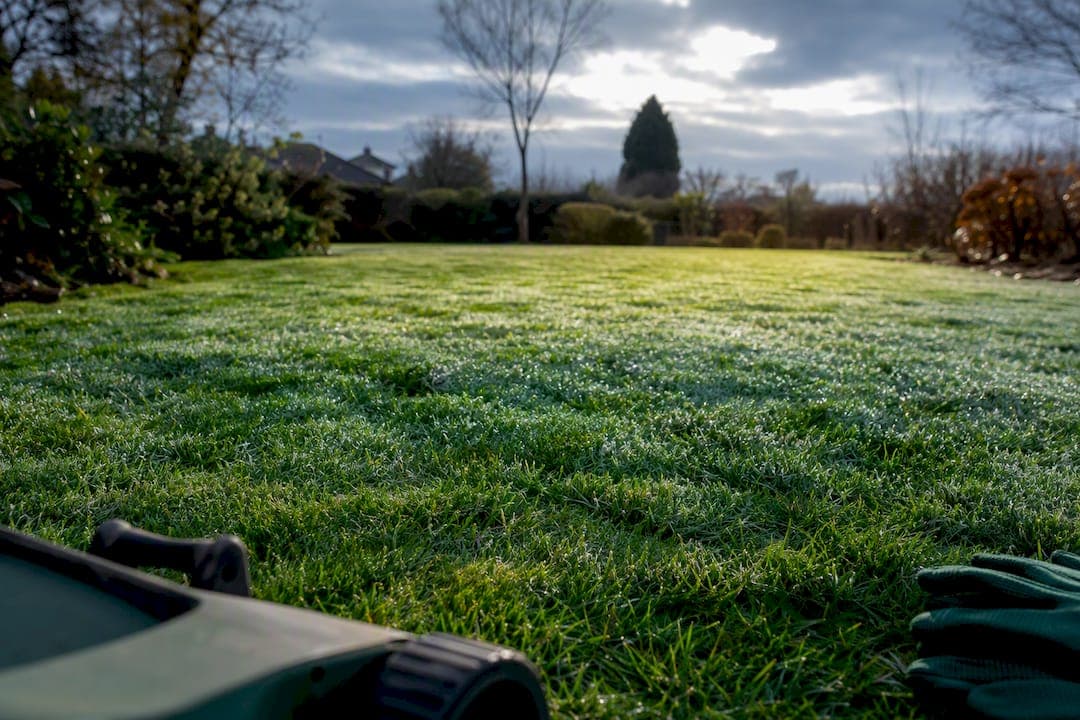
Most Irish lawns need mostly passive care over winter. Clear fallen leaves, avoid walking on frosty or waterlogged turf, and only mow during mild, dry spells at a raised cutting height. Following RHS guidance and firming up problem patches with aeration when the soil allows will keep your grass in far better shape by March. If you'd rather leave it to a professional, Sherry Property Care handles winter maintenance across Dublin.
TL;DR:
- Mowing should be limited to dry, firm conditions, with a raised cut height before the first cold snap to protect grass health during winter.
- Regular leaf removal prevents smothering and fungal growth, with leafmould making a useful soil conditioner for future planting.
- Aeration, either spike or hollow-tine, improves drainage in clay-heavy soils, especially in compacted areas, and should be done when the ground is not saturated.
- Winter fertilization requires low nitrogen, high potassium formulas to support root strength without encouraging soft, frost-sensitive growth.
- Professional help is advisable for deep drainage issues, heavy compaction, or recurrent waterlogging that cannot be fixed with basic tools.
Table of Contents
- Winter lawn care checklist for Irish gardens
- Your month-by-month winter lawn calendar
- Common winter lawn problems and quick fixes
- A Dublin practitioner's view on winter lawn survival
- Why most winter lawn advice misses the point
- Sherry Property Care: winter lawn work done properly
- Sources
- FAQ
Winter lawn care checklist for Irish gardens
Ireland's winter weather does most of the damage on its own. Mild, wet spells followed by sudden frosts put more stress on grass than almost anything a homeowner does deliberately, which is why the checklist below leans towards restraint over action. Get these seven jobs right and your lawn recovers fast come spring.
Mowing: know when to stop
Grass growth slows dramatically once soil temperatures drop, but it doesn't stop entirely. RHS guidance notes that grass continues growing above roughly 7°C, so a mild November or January in Dublin can still call for the odd cut. The rule is simple: only mow on dry days when the ground is firm underfoot, never on frosted or waterlogged turf.
Raise your cutting height before the first cold snap. A close autumn cut strips the plant of leaf area it needs to photosynthesise and build carbohydrate reserves for winter, and turfgrass research on winter stress management confirms that lawns entering the cold months with healthy carbohydrate stores cope far better than those hit with reactive treatments once damage appears. Sharpen your blades too. A blunt mower tears grass tips rather than cutting them cleanly, and torn tips are an open door for fungal disease in damp weather.
Leaves and debris: don't let them sit
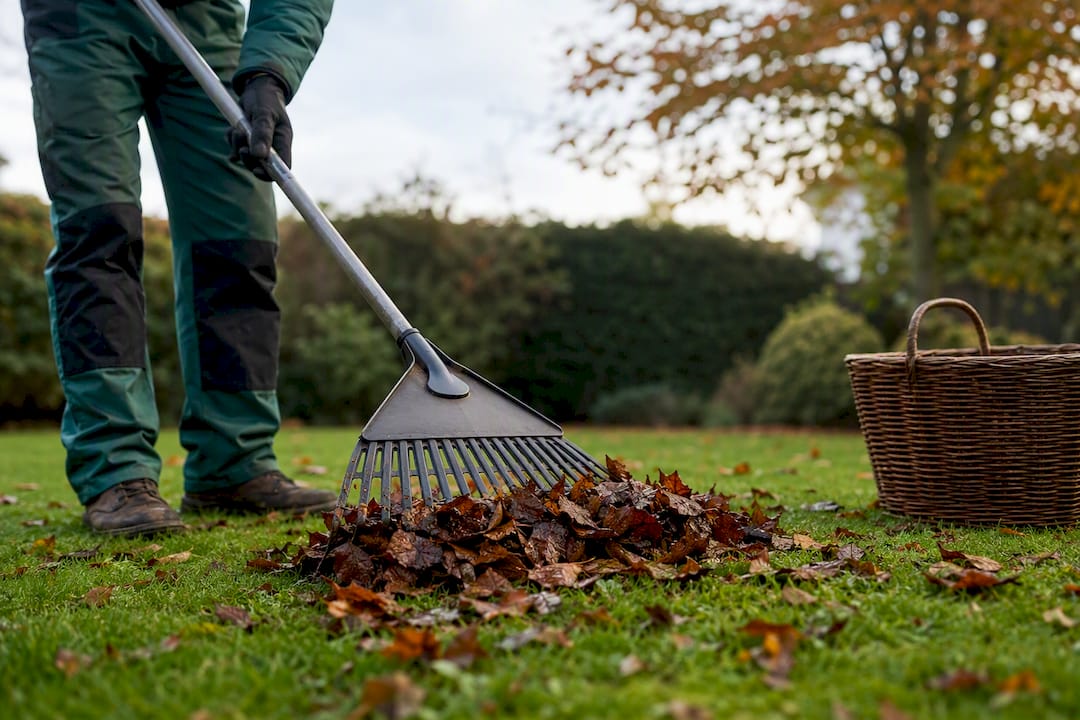
Fallen leaves are the single biggest winter threat to a healthy lawn surface. Left in place, they block light and smother the grass beneath, creating exactly the damp, airless conditions that fungal disease and worm casts thrive in, according to RHS advice for November. Rake or blow leaves off at least weekly during peak fall, and pile them separately to make leafmould rather than binning them. Leafmould takes a year or two to break down fully but makes an excellent soil conditioner for beds and borders.
Aeration and dealing with compaction
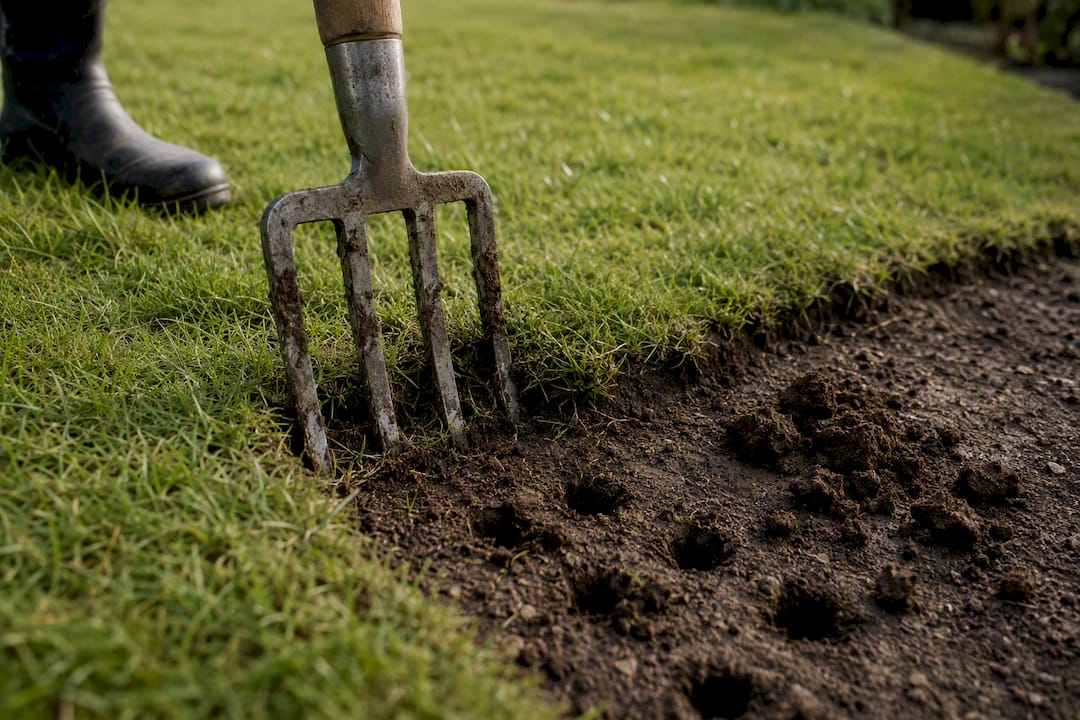
Winter rain compacts soil, particularly on clay-heavy Dublin gardens, and compacted soil drains poorly and starves roots of oxygen. Where the ground is firm enough to work (never when saturated), spike the lawn with a garden fork at regular intervals, pushing in to a sufficient depth. On heavier compacted areas, hollow-tine aeration is the better option. It removes small plugs of soil rather than just making holes, and those plugs should be replaced with a brushed-in sand or loam top dressing to genuinely improve pore space and long-term drainage.
Winter feed: timing matters
Late-season fertiliser needs a different balance to spring or summer feeds. High-nitrogen products push soft, sappy growth that frost damages easily, so an autumn or winter formula with low nitrogen and adequate potassium is the safer choice for Irish conditions. Our lawn fertiliser schedule for Ireland sets out the full feeding calendar if you want to plan the whole year rather than just the cold months.
Drainage and waterlogging
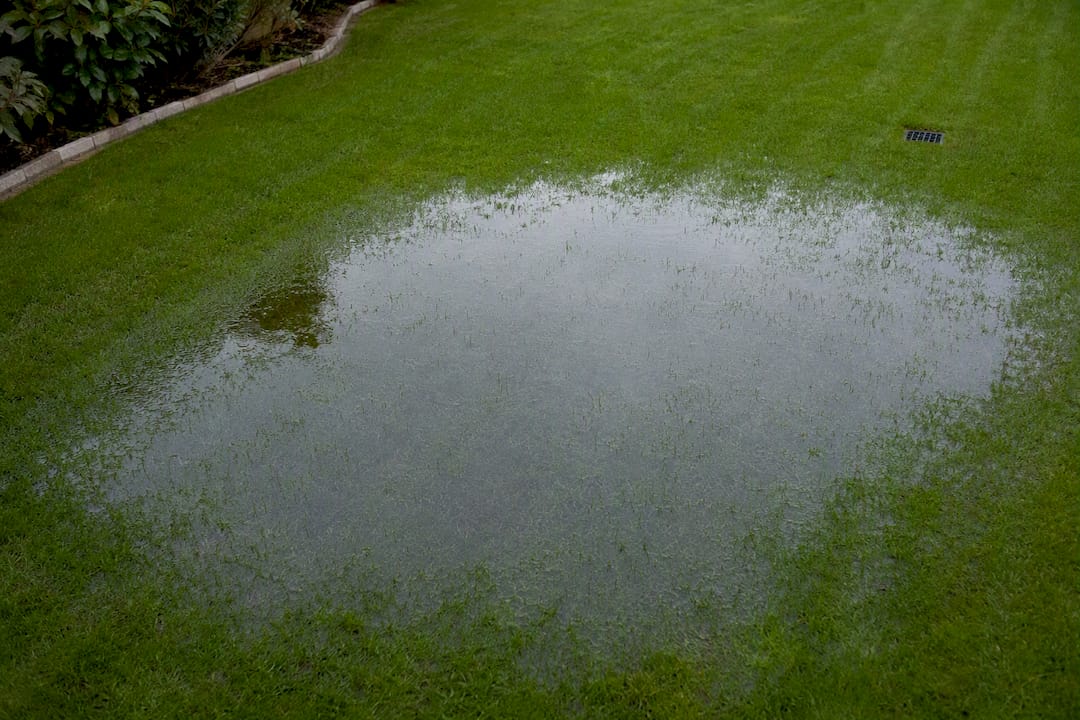
If surface water sits on the lawn for more than 24 hours after heavy rain, according to RHS guidance, you have a genuine drainage problem rather than normal winter dampness. Spiking helps in mild cases. Persistent puddling across a wider area usually points to a deeper issue such as compacted subsoil or poor grading, and that's a job for a professional rather than a weekend fix.
Moss control: treat the cause, not just the symptom
Iron sulphate blackens and kills moss on contact and remains a standard moss treatment across UK and Irish lawns, but it does nothing to fix why the moss appeared. Shade, compaction, and poor drainage are the usual culprits. Scarifying, aerating, and thinning overhanging branches address the root cause; iron sulphate on its own just buys you a season before the moss returns.
Protecting the lawn from wear
- Avoid crossing the lawn when it's frosty or waterlogged, as frozen grass blades can snap and cause damage.
- If you must cross a wet lawn regularly, set level stepping stones along the route rather than wearing a permanent mud track.
- Keep bins, hoses, and garden furniture off the grass during winter storage.
Pro Tip: Stepping stones set flush with the soil surface, not sitting on top of it, stop the mower catching on them come spring and look far tidier than a worn dirt path.
Tools and equipment
Clean and dry your mower before storing it for winter, and drain fuel from petrol models if it won't be used for months. Check blades for rust and have them sharpened before the spring cutting season starts, so you're not caught out when growth picks up again.
Your month-by-month winter lawn calendar
- November: Finish the last big leaf clearance and give the lawn a final tidy cut at a raised height. If the ground is still workable, this is your last realistic window for aeration or top dressing before winter sets in properly, and it's your last chance to apply a winter feed if you haven't already.
- December: Care becomes largely passive. Mow only on the rare mild, dry day, keep paths and steps clear, and avoid the grass entirely during frost. Use this quieter month to plan any repairs you'll tackle once the ground firms up.
- January: Rest and recovery continue. Tackle small repairs, such as levelling worn patches, on days when the soil is dry enough to work without compacting it further.
- February: Keep watching for firm, dry spells to finish repair work. Start planning overseeding and any larger reseeding for March or April, once regular mowing resumes and the lawn is actively growing again.
Common winter lawn problems and quick fixes
Moss shows up as a dense green carpet sitting on top of thinning grass, usually in shaded or poorly drained corners, and it needs cultural fixes like scarifying and aerating alongside any symptomatic treatment. Waterlogging is confirmed by the 24-hour rule: surface water still visible a full day after rain means drainage work is genuinely needed, not just patience.
Fungal patches often appear as pale or reddish rings during mild, damp spells. Most resolve on their own once you resume regular mowing and feeding in spring, so resist the urge to reseed immediately unless the patch is bare soil. Worm casts, meanwhile, are a sign of healthy, biologically active soil rather than a problem. Brush them off once they've dried rather than mowing over them wet, which just smears them across the lawn.
- Moss: treat the shade, compaction, or drainage cause, not only the moss itself.
- Waterlogging: spike small areas yourself; call in help for standing water lasting beyond 24 hours.
- Fungal rings: usually self-resolve with spring mowing and feeding.
- Worm casts: brush off dry, and take them as a good sign, not a bad one.
A Dublin practitioner's view on winter lawn survival
Gerard at Sherry Property Care has spent years maintaining lawns across Dublin's mix of clay-heavy gardens and older, compacted turf, and the pattern repeats every winter. The lawns that come through cleanest are rarely the ones that got the most attention in December. They're the ones that got the right attention in October and November, before the ground turned.
Field jobs this time of year tend to split cleanly. Homeowners can manage leaf clearance, light spiking, and careful mowing themselves. Deeper aeration on compacted clay, drainage correction, and stepping-stone installs on well-trodden routes are where it's worth bringing in help, particularly if a lawn has struggled with the same wet patch for more than one winter. For readers wanting a fuller regional picture, our Lucan lawn care guide covers similar ground with local specifics.
Why most winter lawn advice misses the point
The advice circulating online tends to treat winter as a season of active intervention: feed this, treat that, fix the other thing. It isn't. The research on carbohydrate storage backs this up clearly. A lawn that went into November thick, correctly fed, and free of smothering leaf litter will outperform one given emergency treatment in January every time.
Where conventional advice falls short is in overselling symptomatic fixes. Iron sulphate on moss, quick patch repairs on waterlogged ground, reactive feeds after damage has already shown, these treat what you can see rather than what caused it. My honest read is that Irish homeowners would get more value from spending fifteen minutes in October on leaf clearance and cutting height than an hour in February trying to rescue damaged turf.
Prioritise prevention. Everything else on this checklist is either maintenance or damage control, and the two are not equally important.
— gerard
Sherry Property Care: winter lawn work done properly
Sherry Property Care is the practical alternative for Dublin homeowners who'd rather not spend cold, wet weekends spiking clay soil or hauling wet leaves. We handle leaf clearance, aeration, drainage correction, and overseeding or reseeding once spring repair windows open, all quoted individually rather than sold as a one-size package.

Getting a quote is straightforward. Send a few photos of the lawn, the approximate size, and a quick description of any problem areas, such as standing water or bare patches, and we'll come back with a tailored price. Booking a winter tidy-up or aeration visit in November or early December gets the best results, before the ground turns too wet to work. We cover Dublin and the surrounding areas, and every quote is built around your garden, not a standard rate card.
Ready to get your lawn sorted before the worst of the winter weather sets in? Request your personalised quote from Sherry Property Care today.
Sources
This guide draws on RHS month-by-month lawn advice and turfgrass winter-stress research. Check the RHS site for seasonal updates, and consult a local professional before undertaking major drainage work.
- Monthly gardening tips & advice - December - lawns | RHS
- Turfgrass winter-stress technical update | Agrovista
FAQ
When should I cut the grass after winter in Ireland?
Resume regular mowing once growth is consistent and the ground has dried out, typically from March onwards, gradually lowering the cutting height back down over a few sessions rather than in one go.
Will grass grow in October in Ireland?
Yes. Grass keeps growing through October and into milder spells later in autumn, since growth only slows significantly once temperatures drop below roughly 7°C, so mowing and feeding decisions still matter well into the season.
Can I walk on my lawn in winter?
Avoid it when the grass is frosty or waterlogged, since frozen blades snap underfoot and leave lasting bare patches; use level stepping stones for any route you cross regularly.
Do I need to feed my lawn in winter?
A low-nitrogen, potassium-rich autumn or winter feed applied in November supports root strength through the cold months, but avoid high-nitrogen products that push soft growth frost can damage.
When should I call a professional for winter lawn problems?
Persistent waterlogging lasting more than 24 hours, compacted clay soil needing hollow-tine aeration, or repeated wear tracks are worth handing to a professional like Sherry Property Care rather than tackling with basic tools.