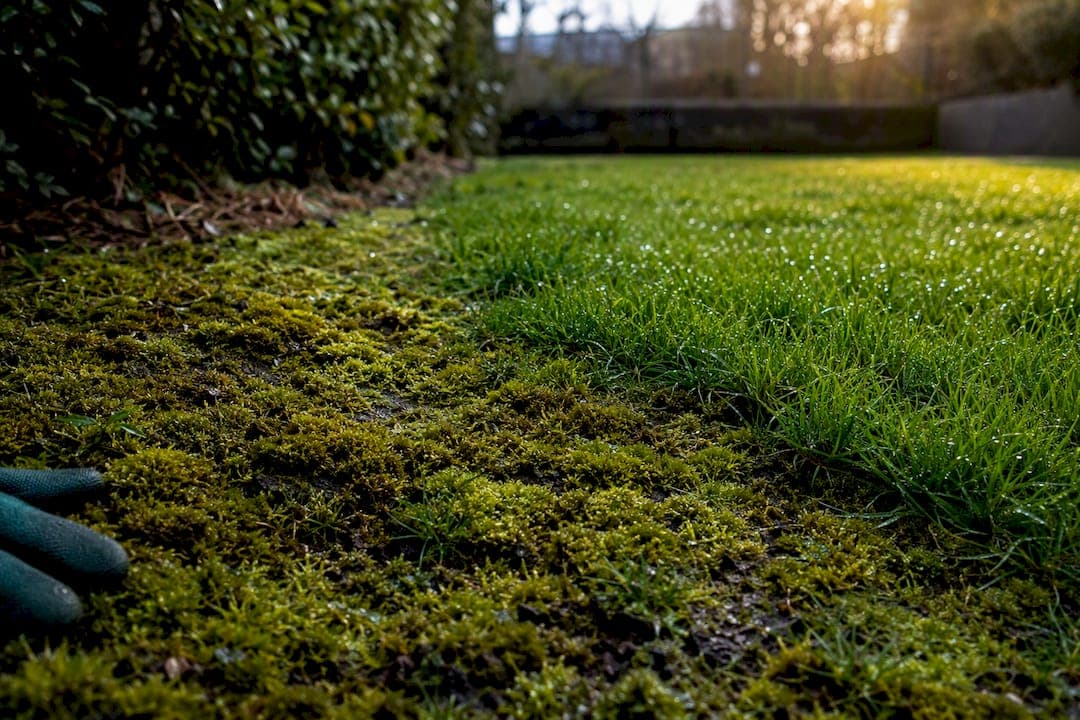
Treat moss when soil temperatures sit consistently above 12°C, usually from mid-March onwards or again in September: scarify or rake first, apply an appropriate treatment, then follow up with aeration and topdressing. Killing the moss is the easy part. Unless you fix the compaction, shade or drainage underneath it, the moss comes back within a season.
TL;DR:
- Proper moss treatment requires working in warm, dry weather with soil temperatures above 12°C, mainly from mid-March to May and September to October.
- Iron-based products give rapid results by drying out moss within days, but overuse can acidify soil and stain surfaces, so careful application is essential.
- Combining mechanical removal, like scarifying or aerating, with soil health practices prevents moss from quickly returning, especially in compacted or shaded lawns.
- Long-term moss control depends on improving drainage, balancing soil pH, and maintaining appropriate mowing heights to prevent moss-friendly conditions.
- Treating moss without addressing underlying issues leads to recurring problems, making professional assessment and soil-centered plans more effective than repeated product cycles.
Table of Contents
- Your step-by-step moss treatment checklist
- When is the best time to treat moss in an Irish lawn?
- Which moss treatments actually work, and how?
- How do you stop moss coming back?
- When should you call in a lawn care professional?
- A Dublin perspective on getting moss treatment right
- Get your Dublin lawn sorted without the repeat treatments
- Sources
- FAQ
Your step-by-step moss treatment checklist
Getting rid of moss properly means working through a sequence, not just tipping a product onto the lawn and hoping. Here's the order that actually works for lawn moss treatment in Ireland.
- Check the weather first. Look for a mild, calm spell with soil temperatures reliably above 12°C. Cold, waterlogged soil slows most treatments right down, and some need dry rain-free windows to bind properly.
- Prepare the surface. Mow the lawn dry, cut to a slightly lower height than normal to expose the moss, then rake or sweep away loose debris and dead thatch so the treatment reaches the soil.
- Pick your treatment category. Iron-based products act fast; organic, bacteria-led fertilisers work slower but feed the soil as they go. Apply with a spreader for even coverage rather than by hand.
- Wait for the result. Most products need 10 to 21 days to fully blacken or break down the moss, depending on temperature and product type.
- Rake out the dead moss, then overseed or topdress any bare patches left behind so grass fills the gap before moss can return.
Pro Tip: Keep pets off treated grass for a recommended safety period after application, and sweep any product off paths and patios promptly to avoid staining from ferrous-based treatments.
Avoid fertilising right beside a moss treatment application unless the label says it's compatible. Mixing the two too closely can waste both products.
When is the best time to treat moss in an Irish lawn?
Timing decides whether a treatment works at all. Ireland's mild, damp climate means moss can appear almost year-round, but treatments only perform reliably in two windows.
- Spring: mid to late March through May, once soil warms and grass growth restarts.
- Early autumn: September to October, while soil is still warm from summer but growth has slowed enough to let you follow up with aeration.
- Avoid treating during drought, hard frost, or when grass has gone dormant. It can't recover if it isn't actively growing.
- Most moss-control products need soil temperatures consistently above 12°C to work, and Mo Bacter's own application guidance specifies this exact threshold, with visible results typically inside one to three weeks.
- Check conditions with a simple soil thermometer pushed a few centimetres into the lawn, and plan around a settled patch of weather rather than a single dry day.
Treating outside these windows rarely fails outright, but it wastes money and slows recovery, since cold, dormant grass can't fill in the gaps moss leaves behind.
Which moss treatments actually work, and how?
Three broad approaches cover almost every moss problem on an Irish lawn: chemical, organic, and mechanical. Each suits a different situation, and most lawns end up needing a combination.
Ferrous sulphate and iron-based moss killers
Iron-based treatments are the fastest way to see results. Moss blackens within days as the iron dries it out, which makes these products popular for anyone who wants a visibly tidier lawn before a weekend or a viewing. The trade-off is that ferrous sulphate temporarily acidifies the surface soil, and repeated use without correcting that pH can actually favour moss over grass in the long run. It also stains paving, fencing and anything else it splashes onto, so careful dosing and a spreader matter more than they might seem to.
Organic and biological alternatives
Bacteria-based, slow-release products take longer, typically one to three weeks rather than days, but they work by improving soil health rather than simply scorching the moss. There's less mess, no dead moss to rake out in some cases, and they're generally the better fit for households with pets or children who use the garden regularly. The insight from Mo Bacter's product guidance is that feeding the soil biology directly tends to produce a lawn that resists moss returning, rather than just removing this year's growth.
Mechanical methods: raking, scarifying and aeration
Raking lifts loose surface moss and thatch by hand. Powered scarifying goes deeper, tearing out moss and dead material more aggressively, but it should only be done when the grass has time and warmth to regrow quickly afterwards, usually early autumn or late spring. Hollow-tine aeration addresses the compaction that often causes moss in the first place, rather than the moss itself.
- Use raking for light, surface-level moss on an otherwise healthy lawn.
- Use scarifying where thatch and moss are heavy, timed so recovery follows fast.
- Use aeration on compacted or clay-heavy soil, regardless of how much moss is currently visible.
Pro Tip: A local expert would tell you to check the soil, not just the moss. If you scarify a compacted lawn without aerating afterwards, you've cleared the symptom and left the cause exactly where it was.
Decision-making here comes down to lawn size and priorities. A small garden with light moss suits a quick iron treatment. A larger lawn with recurring moss, shade or waterlogging needs the mechanical and soil-health route, even though it takes longer to show.
How do you stop moss coming back?
Killing moss without fixing the soil underneath it almost always means treating the same patch again next year. Long-term control comes from a handful of habits repeated across the seasons, not a single clever product.
Aeration breaks up compaction that stops water draining and starves grass roots of air, both conditions moss thrives in. Hollow-tine aeration, which physically removes small soil cores, works better than simple forking on heavily compacted ground, and Lawn Care Ireland's guidance recommends brushing sand or compost into the holes afterwards to keep them open. Do this annually on compacted sites, either in autumn or spring.
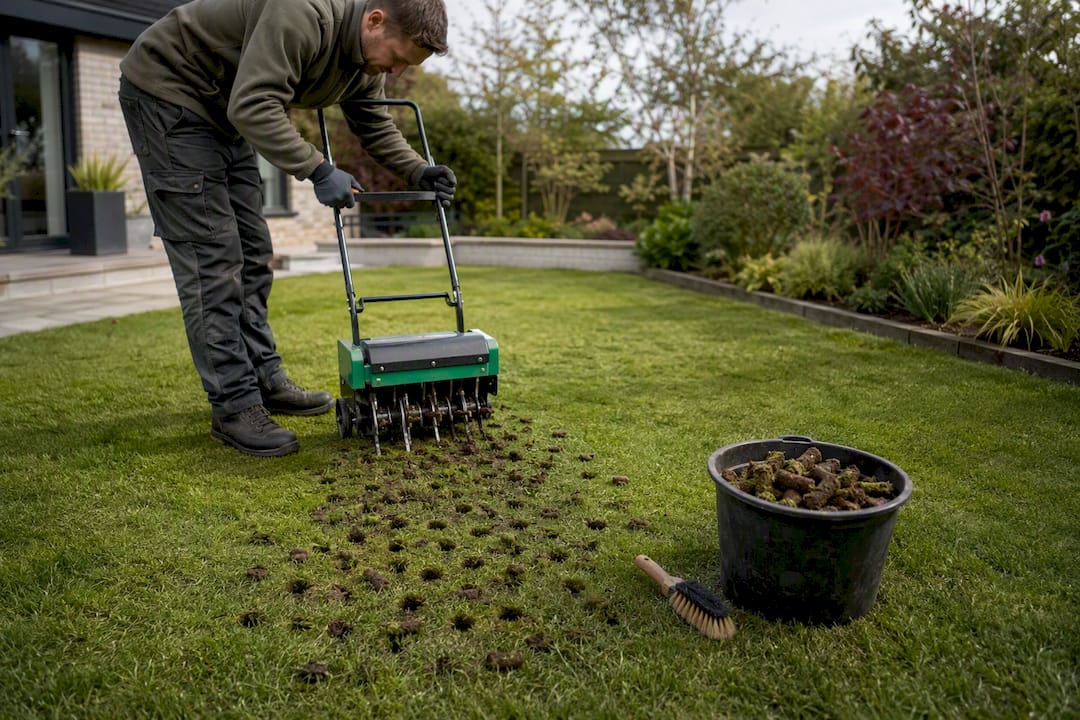
Topdressing and overseeding fill the gaps aeration and scarifying leave behind. A sand and soil mix spread thinly after aeration improves drainage further, while overseeding bare patches gives grass a head start over any moss spores waiting in the soil.
pH testing and liming matter more than most homeowners realise. Grass prefers slightly acidic to neutral soil, and moss tolerates a wider range, so testing before you treat tells you whether lime will actually help. Avoid applying lime too soon after an iron-based moss treatment, since the two can work against each other.
Mowing height is one of the simplest fixes available. Keeping grass at 30 to 40mm rather than scalping it lets grass shade out moss spores and develop a deeper root system. Leaving fine clippings on the lawn occasionally also feeds soil biology.
Drainage improvements through sand topdressing, levelling low spots, or in serious cases professional drainage work, remove the standing water moss depends on. Building a healthy soil base underneath the lawn is the single biggest factor in whether grass or moss wins that competition long-term.
In heavily shaded gardens, full eradication may not be realistic. Some Irish lawns under mature trees will always carry some moss, and a shade-tolerant groundcover or accepting a lower-maintenance patch can be more sensible than fighting it every season. A fertiliser schedule spaced roughly every ten weeks through the growing season keeps grass competitive enough to hold its ground where light allows it.
When should you call in a lawn care professional?
Some moss problems are a weekend job. Others need machinery, soil testing, or a staged plan that stretches over months, and that's when a contractor earns their fee.
- Widespread moss covering most of the lawn rather than isolated patches.
- Chronic waterlogging that treatment alone won't fix.
- Jobs needing scarifying or aeration machinery you don't want to hire and learn to use yourself.
- Soil replacement or regrading where drainage is fundamentally the problem.
A proper contractor should offer a site survey, a soil test, and a realistic staged plan rather than a one-visit fix. When getting quotes, ask about experience with Irish soils specifically, examples of similar jobs, and whether follow-up visits are included. For a useful remote quote, a few clear photos of the affected areas along with basic details, such as lawn size and how long the moss has been an issue, let a contractor assess the job properly before turning up.
A Dublin perspective on getting moss treatment right
Most moss advice online is written for a generic climate that doesn't quite match Ireland's damp, mild, changeable weather. What works in a drier climate with harder frosts doesn't translate directly here, and that gap is where a lot of DIY treatments underdeliver.
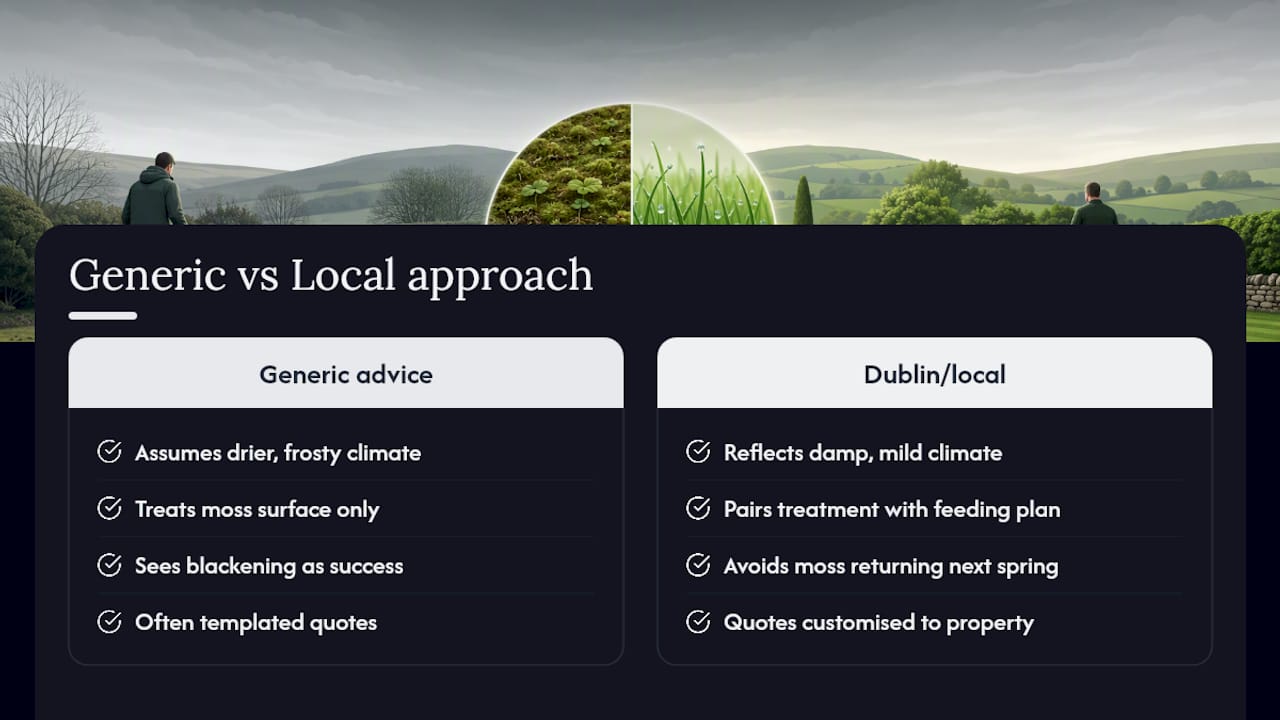
A local grounds maintenance provider observes that homeowners treat the moss, see it blacken, feel satisfied, then wonder why it's back by the following spring. The detailed local guidance published on lawn fertiliser scheduling reflects a straightforward view: treatment without a feeding and soil plan behind it is a temporary fix, not a solution.
Quotes are customised to the property rather than templated, because a shaded, waterlogged lawn in Lucan needs a different plan to an open, well-drained garden a few miles away. That's the whole basis of the service: look at the actual soil and site conditions, not just the moss sitting on top of it.
— gerard
Get your Dublin lawn sorted without the repeat treatments
Sherrypropertycare is the alternative to endless DIY product cycles for lawn moss treatment in Dublin: a proper site assessment and a soil-first plan instead of another bag of iron sulphate that only buys you a few months.

Every quote is built around your actual garden, whether that's a shaded patch in Lucan struggling with recurring moss or a larger commercial site with drainage issues across several beds. Rather than guessing at products, Sherrypropertycare looks at compaction, shade and drainage together and proposes a realistic plan with a timeline attached. Gardening and grounds maintenance services commonly cover lawn care and landscaping, aeration, hedge trimming, and general property upkeep in the Dublin area.
If your lawn's moss keeps returning no matter what you try, send a few photos through for a customised quote and get a proper assessment of what's actually causing it.
Sources
For further technical detail, the Mo Bacter product page covers temperature-specific application guidance, Woodie's community advice explains the removal process step by step, and Soil.ie sets out the soil-preparation basics behind lasting lawn health.
FAQ
What kills lawn moss but not grass?
Iron-based (ferrous sulphate) products and organic bacterial fertilisers both target moss specifically, since grass tolerates the treatment while moss dries out or breaks down. Follow label dosing closely, as overapplication can still stress grass alongside the moss.
What is the best treatment for lawn moss in Ireland?
There's no single best product. Iron-based treatments give the fastest visible results, while organic biological options work more slowly but improve soil health at the same time, which matters more for preventing regrowth than the initial kill.
What is the best time to kill moss in a lawn?
Spring, from mid to late March through May, or early autumn, from September to October, when soil temperatures are consistently above 12°C and grass is actively growing enough to recover.
What is the fastest way to get rid of moss in my lawn?
Scarify or rake to remove the bulk of it mechanically, then apply an iron-based treatment for the fastest visible blackening, typically within days rather than weeks. For lasting results, follow with aeration and topdressing rather than stopping at the kill.